Explore practical steps to prevent cyber attacks, strengthen cybersecurity protections, respond to threats, and reduce business risk over time.
Guide
10 minute read
Jun 08, 2026
Cyberattacks are no longer rare incidents that only happen to large enterprises. Businesses of every size and industry face potential cyberthreats from phishing emails, malware, ransomware, compromised credentials, social engineering, and vulnerabilities hiding inside outdated systems.
While no organization can eliminate every risk, the right strategy can dramatically reduce exposure. By understanding where threats come from, strengthening your security controls, training employees, and building a clear response plan, your business can become harder to attack and better prepared to recover.
This guide breaks down how to prevent cyberattacks, how to detect and mitigate cyber threats, what to do during an incident, and how to reduce cybersecurity risks over time.
Do I Really Need a Cybersecurity Plan for My Business?
Every business that uses email, stores data, manages customer information, accepts payments, relies on cloud tools, or operates connected devices needs a cybersecurity plan.
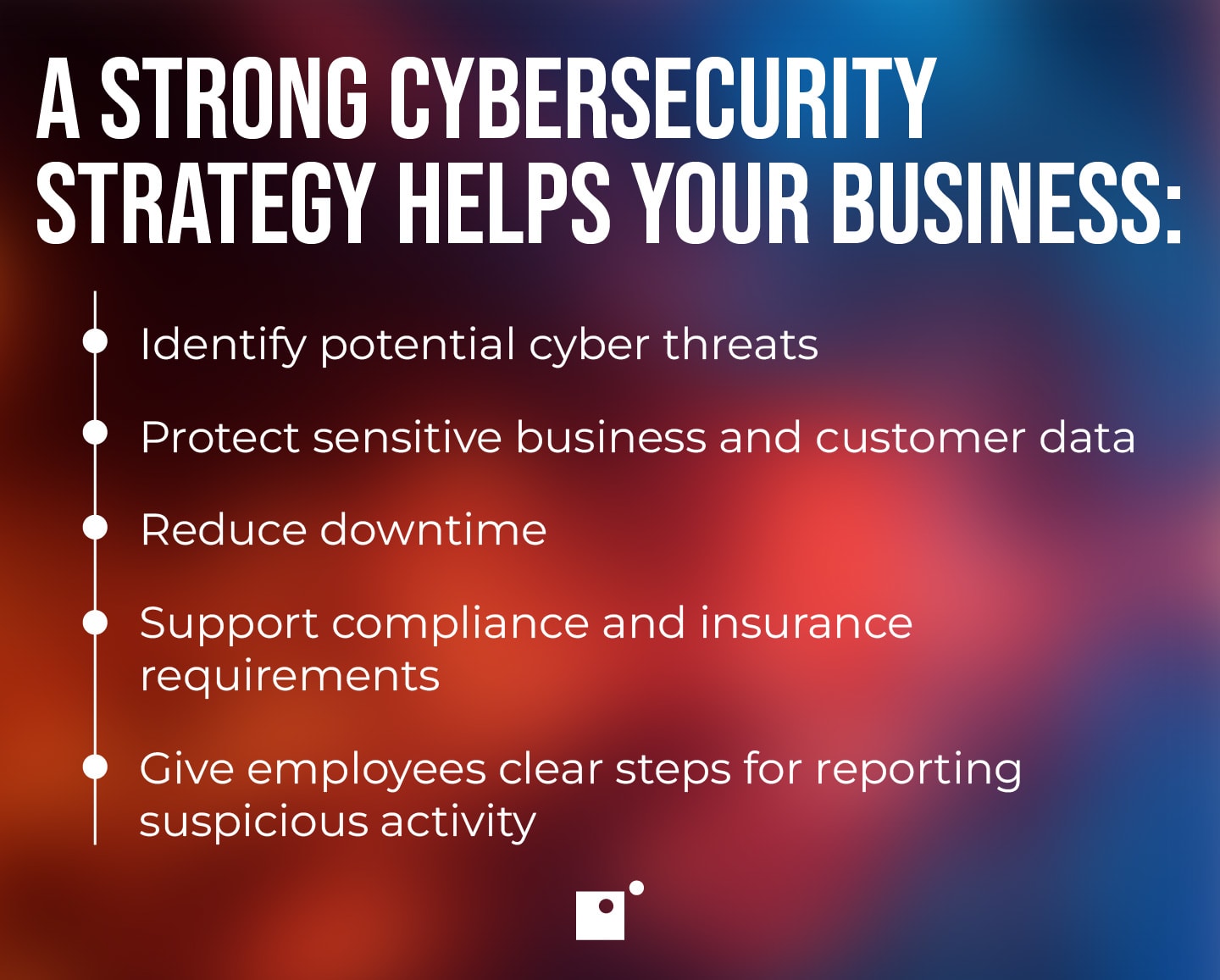
A cybersecurity plan is not just an IT document. It is a business continuity tool. Without one, organizations are more likely to make rushed decisions during an incident, overlook critical vulnerabilities, experience longer downtime, and struggle to recover important systems and data.
Cybersecurity is also an investment in stability. When your business understands the ROI of cybersecurity strategy, prevention becomes easier to justify because it protects productivity, revenue, reputation, and trust.
What Is Cyberattack Prevention?
Cyberattack prevention is the practice of identifying, reducing, and managing cybersecurity risks before they lead to a breach, outage, or disruption.
It includes the people, processes, policies, and technologies used to protect your business from cyber threats. This can include endpoint protection, network security, employee training, vulnerability management, access controls, incident response planning, data backups, and ongoing monitoring.
Effective cyberattack prevention is not one tool or one project. It is a layered strategy that helps your business prevent, detect, respond to, and recover from attacks.
The goal is not to create a perfectly risk-free environment. The goal is to make your organization harder to attack, faster to respond, and better prepared to recover.
Common Cyberattacks Businesses Need to Prevent
Before your business can prevent cyber threats, it helps to understand the most common types of attacks organizations face.
Phishing and social engineering attacks use deceptive emails, text messages, phone calls, websites, or impersonation tactics to trick users into sharing credentials, clicking malicious links, downloading malware, or sending sensitive information.
Vishing is a cyberattack that makes use of phone calls and other smartphone communications to dupe victims. These attacks work because they target people instead of technology. Attackers may impersonate executives, vendors, IT support teams, banks, or trusted partners to create urgency and pressure employees into taking action.
Malware is software designed to damage systems, steal data, spy on activity, or give attackers unauthorized access. Common forms include viruses, worms, trojans, spyware, adware, and ransomware.
Malicious code can enter your environment through infected attachments, compromised websites, unsafe downloads, removable devices, or unpatched vulnerabilities.
Ransomware is one of the most disruptive forms of malware. It locks or encrypts files, systems, or networks until a ransom is paid. These attacks can interrupt operations, expose sensitive data, and create major financial and reputational damage.
Preventing ransomware requires strong backups, endpoint protection, access controls, employee awareness, network segmentation, and a tested response plan.
Businesses also need to prevent credential-based attacks, which happen when cybercriminals steal or guess usernames and passwords to access systems. These attacks may involve phishing, password spraying, brute force attempts, credential stuffing, or stolen credentials purchased on the dark web.
Multi-factor authentication, strong password policies, single sign-on, and identity monitoring can help reduce this risk.
Artificial intelligence is also changing the threat landscape. Attackers can use AI to create more convincing phishing messages, automate attacks, generate malicious code, or impersonate trusted individuals more effectively.
As cyber threats become more sophisticated, employee education, behavioral monitoring, and layered defenses become even more important. Next-generation antivirus (NGAV) uses modern technologies like machine learning and artificial intelligence to proactively identify and neutralize both known and unknown cyber threats in almost real-time.
How to Assess Your Current Cybersecurity Risk
Before building a cyberattack prevention plan, your business needs to understand its current risk level. A cybersecurity risk assessment helps identify where your organization is vulnerable, what assets need the most protection, and which risks should be prioritized first.
Start by looking at what sensitive data your business stores, processes, or transmits. Then evaluate which systems are most critical to daily operations, who has access to important systems and data, whether multi-factor authentication is being used, whether devices and applications are regularly updated, and whether backups are in place, tested, and protected.
Your assessment should also look at whether there are known vulnerabilities in the network, whether employees know how to report suspicious activity, whether an incident response plan exists, and whether third-party vendors introduce additional risk.
A cybersecurity risk audit can help uncover gaps in policies, tools, processes, and user behavior. From there, your business can prioritize remediation based on likelihood, impact, and urgency.
Core Cybersecurity Protection Methods Every Business Should Use
Cybersecurity protection methods work best when layered together. Instead of relying on one tool to stop every attack, layered cybersecurity creates multiple barriers that make it harder for attackers to succeed.
Multi-Factor Authentication
Every business should start with multi-factor authentication, which requires users to verify their identity with more than a password. There are multiple types of MFA. This is one of the most important ways to reduce the risk of credential-based attacks.
Keep Systems Updated
Businesses should also keep systems and software updated. Outdated software can contain known vulnerabilities that attackers actively exploit, so regular patching helps close these gaps before they can be used against your organization.
Endpoint Security
Endpoint security is another essential layer. Every laptop, desktop, server, and mobile device connected to your business environment should be protected with tools that help detect suspicious behavior, block malware, and provide visibility into device activity.
Strong Backups
Backups help your business recover after ransomware, accidental deletion, system failure, or data corruption. However, a backup is only useful if it works when you need it, so restoration should be tested regularly.
Access Controls
Access controls should follow the principle of least privilege, meaning employees only have access to the systems and data they need to do their jobs. Access should also be reviewed regularly, especially when employees change roles or leave the company.
Employee Training
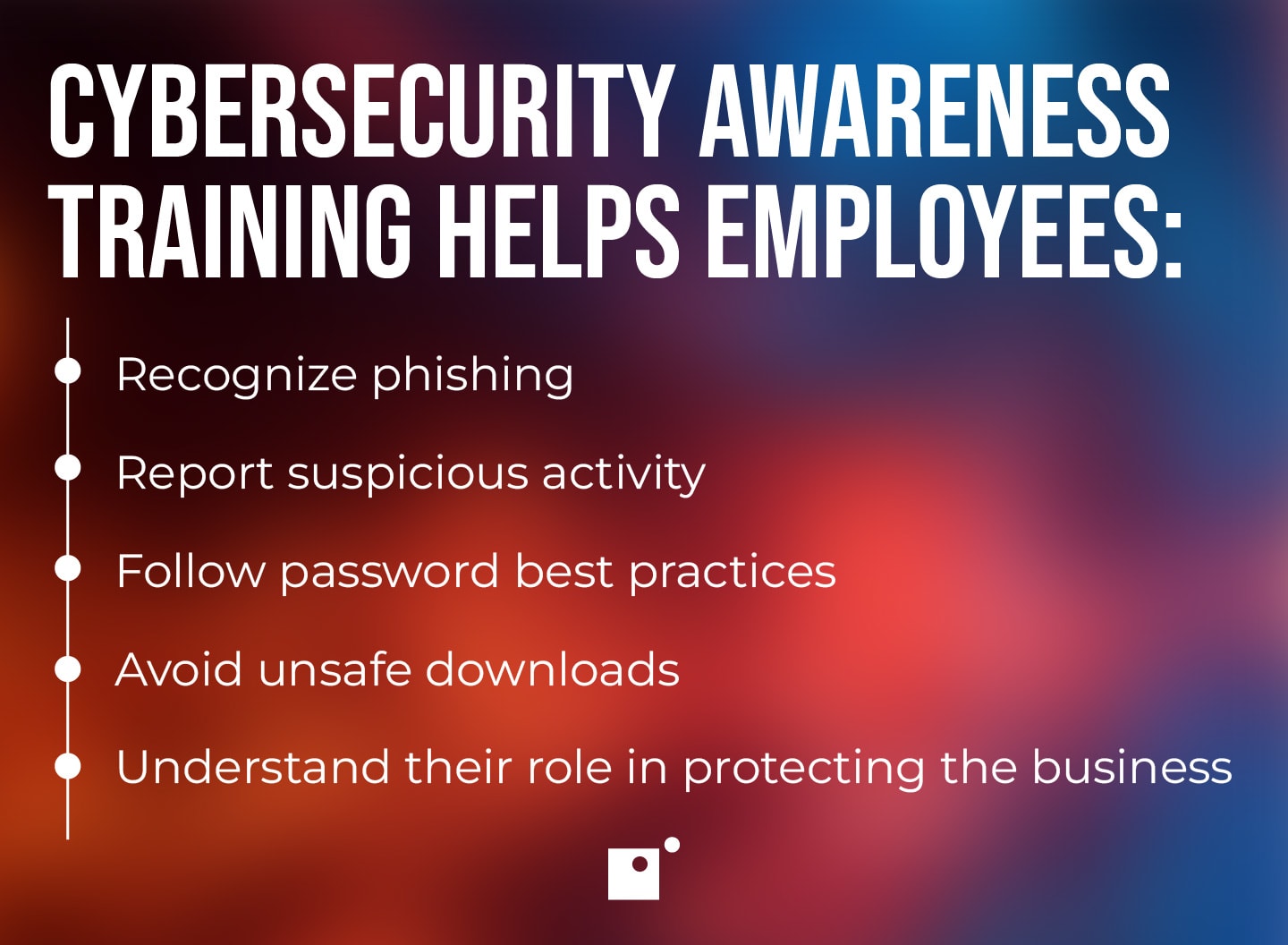
Employee training is another key protection method.
Email security, web filtering, firewalls, vulnerability management, identity management, threat detection, and incident response tools can also support a stronger cybersecurity tech stack. The right mix of tools should fit your business’s size, industry, compliance obligations, risk profile, and internal capacity.
How to Detect and Mitigate Cyberthreats
Prevention is critical, but businesses also need the ability to detect and mitigate cyber threats quickly. The faster your organization can identify suspicious activity, the faster it can contain the threat and limit damage.
Businesses should monitor systems, endpoints, networks, and user behavior for warning signs such as unusual login attempts, failed login spikes, access from unfamiliar locations, large data transfers, disabled security tools, unexpected software installations, unusual file encryption activity, or emails sent from an employee’s account without their knowledge.
Threat detection tools can help identify suspicious behavior across your environment and alert security teams before an issue spreads. Depending on the business, this may include endpoint detection and response, managed detection and response, security information and event management, vulnerability scanning, or continuous monitoring.
Employees also need a clear reporting process. They should know exactly how to report suspicious emails, pop-ups, phone calls, login alerts, or unusual system behavior. Reporting should be simple, fast, and judgment-free.
When a threat is detected, mitigation starts with containment. This may include disconnecting affected devices, disabling compromised accounts, blocking malicious domains, resetting passwords, isolating systems, or removing malware. A clear incident response plan helps your business act quickly instead of improvising under pressure.
How to Build a Cyberattack Prevention Plan
A cyberattack prevention plan gives your business a structured way to reduce risk before an incident occurs.
Step 1: Identify Your Critical Assets
Start by listing the systems, data, applications, devices, and processes that are most important to daily operations. This may include customer data, financial systems, email, cloud platforms, intellectual property, production systems, and communication tools.
Step 2: Assess Your Risks and Vulnerabilities
Look across the organization for gaps that could increase risk, such as outdated software, weak passwords, lack of MFA, untrained users, unmanaged devices, vendor risk, missing backups, and unclear response processes.
Step 3: Prioritize Security Controls
Once risks are understood, decide which protections should come first based on business impact, likelihood, compliance requirements, and available resources. Foundational controls like MFA, patching, endpoint security, backups, employee training, and access management are strong places to start.
Step 4: Define Roles and Responsibilities
During an incident, confusion costs time. Leadership, IT, legal, compliance, communications, and outside security partners should know what they are responsible for before something happens.
Your response plan should outline escalation steps, communication plans, containment procedures, recovery steps, and documentation requirements. Review and update it regularly as new threats, tools, systems, and compliance requirements emerge.
What to Do During a Cyberattack
If your business suspects a cyberattack is happening, the most important thing is to act quickly and follow a defined response process.
Report the Issue Immediately: Employees should notify the appropriate internal contact or security team as soon as they notice suspicious activity.
Escalate Based on Severity: Depending on the incident, leadership, IT, legal, compliance, communications, insurance, and outside cybersecurity experts may need to be involved.
Isolate Affected Systems: To help prevent the attack from spreading, the response team may need to disconnect impacted devices, disable compromised accounts, block malicious domains, or restrict access to certain systems.
Avoid Turning Systems Off Without Guidance: Employees should not shut down devices unless instructed by the response team, as doing so could erase valuable forensic evidence.
Document Everything: Record what happened, when it was discovered, who reported it, which systems were affected, and what actions were taken. Emails, logs, screenshots, alerts, and system activity may all support investigation and recovery.
Communicate Carefully: Internal and external messaging should be accurate, timely, and aligned with leadership, legal, IT, and security teams. Avoid making assumptions until the incident has been properly investigated.
What Not to Do During a Cyberattack
The wrong response can make a cyberattack worse.
Do Not Ignore Early Warning Signs: Small issues such as unusual login alerts, strange emails, missing files, slow systems, or unexpected pop-ups can point to a larger compromise.
Do Not Delete Evidence: Deleting suspicious emails, wiping devices, clearing logs, or changing systems without guidance can make it harder to investigate the attack.
Do Not Communicate Without a Plan: During a serious incident, rushed communication can create confusion, increase risk, or spread inaccurate information.
Do Not Assume the Threat Is Gone After One Fix: Removing one malicious file or resetting one password may not fully resolve the issue. Attackers may have created new accounts, installed persistence tools, accessed other systems, or stolen data.
Businesses should also avoid rushing into paying a ransom. Paying does not guarantee that data will be restored or that stolen information will not be leaked. It may also create legal, financial, and operational complications. Before making any decisions, businesses should work with legal counsel, cybersecurity experts, insurance providers, and law enforcement.
How to Recover After a Cyberattack
Recovery is about more than getting systems back online. Your business also needs to understand what happened, close security gaps, communicate appropriately, and strengthen defenses for the future.
Start by investigating the root cause. Determine whether the attack came from a phishing email, stolen password, unpatched vulnerability, misconfigured cloud setting, compromised vendor, or another issue. Understanding the cause helps prevent the same issue from happening again.
Before restoring systems, confirm that malware, unauthorized access, and persistence mechanisms have been removed. When possible, restore from clean, verified backups. Compromised accounts should have credentials reset, and authentication controls should be strengthened.
The business should also review whether sensitive information was accessed, stolen, deleted, or altered. This may affect legal, regulatory, insurance, and customer notification requirements.
After the incident, document lessons learned. Review what worked, what slowed the response, and what needs to change. Update policies, tools, training, and incident response plans based on what was learned.
How to Reduce Cybersecurity Risks Over Time
Cybersecurity is not a one-time project. Threats change, businesses grow, employees come and go, systems evolve, and attackers adapt. Reducing cybersecurity risks over time requires continuous improvement.
Regular risk assessments help your business identify new vulnerabilities, evaluate existing controls, and prioritize improvements. Employee training should also happen regularly, not just during onboarding, so people stay prepared for phishing, social engineering, password risks, data handling mistakes, and incident reporting.
Businesses should also review cybersecurity insurance requirements, as providers may require specific controls such as MFA, endpoint detection, backups, employee training, incident response planning, and vulnerability management.
Depending on your industry, your business may need to meet specific cybersecurity standards, contractual obligations, or regulatory requirements. Staying aligned with these expectations can reduce risk and support customer trust.
Vendor risk should also be reviewed regularly. Third-party providers can introduce risk into your environment, especially if they have access to systems, data, or sensitive workflows.
Many organizations also benefit from working with a cybersecurity partner. A partner can help assess risk, implement protections, monitor threats, support compliance, and guide long-term strategy when internal teams do not have the time, tools, or expertise to manage everything alone.
Cybersecurity Frameworks and Standards That Can Guide Prevention
Cybersecurity frameworks help businesses organize their prevention, detection, response, and recovery efforts. They provide structure for identifying risks, implementing controls, and improving security maturity over time.
The NIST Cybersecurity Framework is commonly used to guide cybersecurity strategy. NIST’s functions help organizations identify, protect, detect, respond to, and recover from cyber threats.
Layered cybersecurity is another helpful approach. It uses multiple security controls to protect different parts of the business environment, reducing reliance on any single tool or process. This may include endpoint protection, MFA, email security, employee training, backups, firewalls, monitoring, vulnerability management, and incident response planning.
For organizations working with the defense industrial base, CMMC requirements help ensure that businesses are protecting sensitive government and defense-related information.
CMMC readiness may involve access controls, documentation, risk management, incident response, system monitoring, employee training, and other cybersecurity practices.
Prevention Starts Before the Attack
Cyberattacks can be disruptive, costly, and stressful, but businesses are not powerless against them. With the right prevention strategy, your organization can reduce cybersecurity risks, protect critical systems, detect threats earlier, and recover faster when incidents occur.
The most effective approach is proactive and layered. Assess your risks, strengthen your cybersecurity protection methods, train your employees, monitor for threats, build a response plan, and continue improving over time.
Cybersecurity prevention protects your people, your data, your operations, and the trust your business depends on. Learn more about cybersecurity services here.
Lauren Hando
Copywriter
Lauren Hando is a Copywriter for Impact's in-house marketing team. She writes, edits, and reviews copy for a variety of mediums—including print, digital, video, social, paid ads, sales collateral, and more—to motivate the target audience and support the sales team.