5 Examples of Smart Technology and AI in Healthcare
This blog covers five examples of smart technology and digital transformation in healthcare including: smart monitors, telehealth, connected ER solutions, smart hospital development, and AI.
Blog Post
10 minute read
Jul 27, 2026
The development of smart technology has changed the way we live our day-to-day lives. From translating languages to image searching to changing the lights in the living room with voice commands, smart technology is everywhere. Beyond our day-to-day convenience, though, smart technology has had a profound impact on the healthcare industry.
Smart technology and digital transformation in healthcare have changed the way patients are treated with services like telehealth and remote care, health monitoring technology, and things like patient portals, which connect patients and doctors like never before.
Smart technology is not limited to large hospital systems, either. General practices, community health centers, specialty clinics, behavioral health providers, and multi-location healthcare organizations can all use digital tools to improve access, reduce administrative strain, and help care teams work with better information.
For organizations looking to modernize care delivery, the right technology strategy for healthcare organizations can make everyday operations more connected, secure, and patient-focused.
Join us below as we explore five types of smart technology being used in modern healthcare, including:
What Is Smart Technology and Digital Transformation in Healthcare?
Smart technology refers to devices that make use of AI, the Internet, connectivity to the cloud, and more modern functionalities that they previously did not have.
A few examples of smart technology in healthcare are smart beds that can track patient movements and alert nurses when a patient leaves the bed, or an inventory management system powered by AI that can track and monitor inventory, and then automatically order new supplies when necessary.
Let’s explore five examples of smart tech in healthcare that enhance the patient experience, improve proactive care procedures, and ultimately create a healthier world.
1. Remote Monitoring and Automated Healthcare Systems
Remote monitoring of patients’ healthcare is a growing trend that goes beyond traditional healthcare and into mainstream culture. Smartwatches and fitness trackers have become standard for many people, monitoring health factors like heart rate, blood oxygen, irregular heartbeat monitoring, and more.
The next iteration of smart wearables are actually smart rings which still connect to your smartphone, but use a series of sensors to take measurements from your finger to track a whole variety of internal body metrics at a more accurate clip than smartphones. Though the ring doesn’t have any sort of screen, you can see all of the data it collects and tracks on your smartphone.
These smart wearables are making it easier for patients to keep a tab on their regular daily activity, giving their healthcare professionals more visibility into patterns, and a better pool of health data to work with.
There are several wearable items or devices healthcare providers and patients can take advantage of to improve overall healthcare, including:
Biosensors
Smart thermometers
Connected inhalers
Smart watches
Fitness trackers (FitBits)
ECG monitors
Blood pressure monitors
Wearable biosensors are another technology used in medical organizations. These allow providers across the world to monitor patients and administer proactive care. These sensors are worn on the body and monitor vital health signs like temperature and heart rate to give healthcare providers more information and insights on the progression of diseases, illnesses, and overall health.
In fact, it was just a few years ago when biosensors helped the world track the spread of COVID-19 by monitoring patients to detect symptoms and other signs of the virus. Medical staff could monitor patient data thanks to the devices and avoid unnecessary exposure.
2. Telehealth and Remote Care
Many of us are now familiar with telehealth, which became a popular choice for healthcare providers and patients when the pandemic brought more attention to the application of smart tech in healthcare. With the help of conferencing technology, providers could virtually treat patients over video call, provide prescriptions, and perform follow-up visits.
Part of this virtual care was the use of medical portal technology to build secure online healthcare portals to help providers and patients track treatment, store health records, and collect and access data from wearable devices or clinic visits.
While the use of telehealth and remote care became prevalent after the onset of the Covid pandemic, it is clear that both patients and practitioners have found benefits in the use of this technology and hospitals will continue to use it.
3. Connected Emergency Response Solutions
Connectivity can greatly improve the efficiency and response times of emergency care, something that can be the difference between life and death. With modern healthcare smart technology, it’s possible to share data between ambulances, physicians, first responders, and accident and emergency departments in a reasonable amount of time that facilitates real-time responses.
This technology enables faster communication, video calls with doctors from inside ambulances, quicker patient histories, and easier hospital admittance with history and conditions already established.
On arrival, doctors can already have patient data on-hand—including vital signs, blood pressure, heart rate, temperature, etc.
4. Smart Healthcare Operations and Infrastructure
Smart healthcare management can help improve efficiency and effectiveness, improve patient experience, and help doctors by connecting digital systems to make it easier to access information like bed occupancy, device usage, equipment status, materials and supply counts, and other operational data.
Tracking this information and using it in decision-making can improve resource management, reduce waste, and help hospital staff avoid not having what’s needed due to bad tracking or incorrect data collection.
However, smart healthcare management is not only about tracking beds or equipment in a hospital. For many healthcare organizations, it is about making sure clinicians and staff can securely access the systems, records, devices, and communication tools they need across every location.
For example, Tapestry 360 Health, a federally qualified health center serving patients across 15 clinics on Chicago’s North Side and nearby suburbs, needed reliable technology to support care across multiple locations. The organization serves more than 28,000 patients each year, many of whom face barriers to routine care.
In that kind of care environment, smart technology is about secure access to electronic medical records, stable hardware, protected patient data, cloud-based infrastructure, and reliable support that keeps care moving.
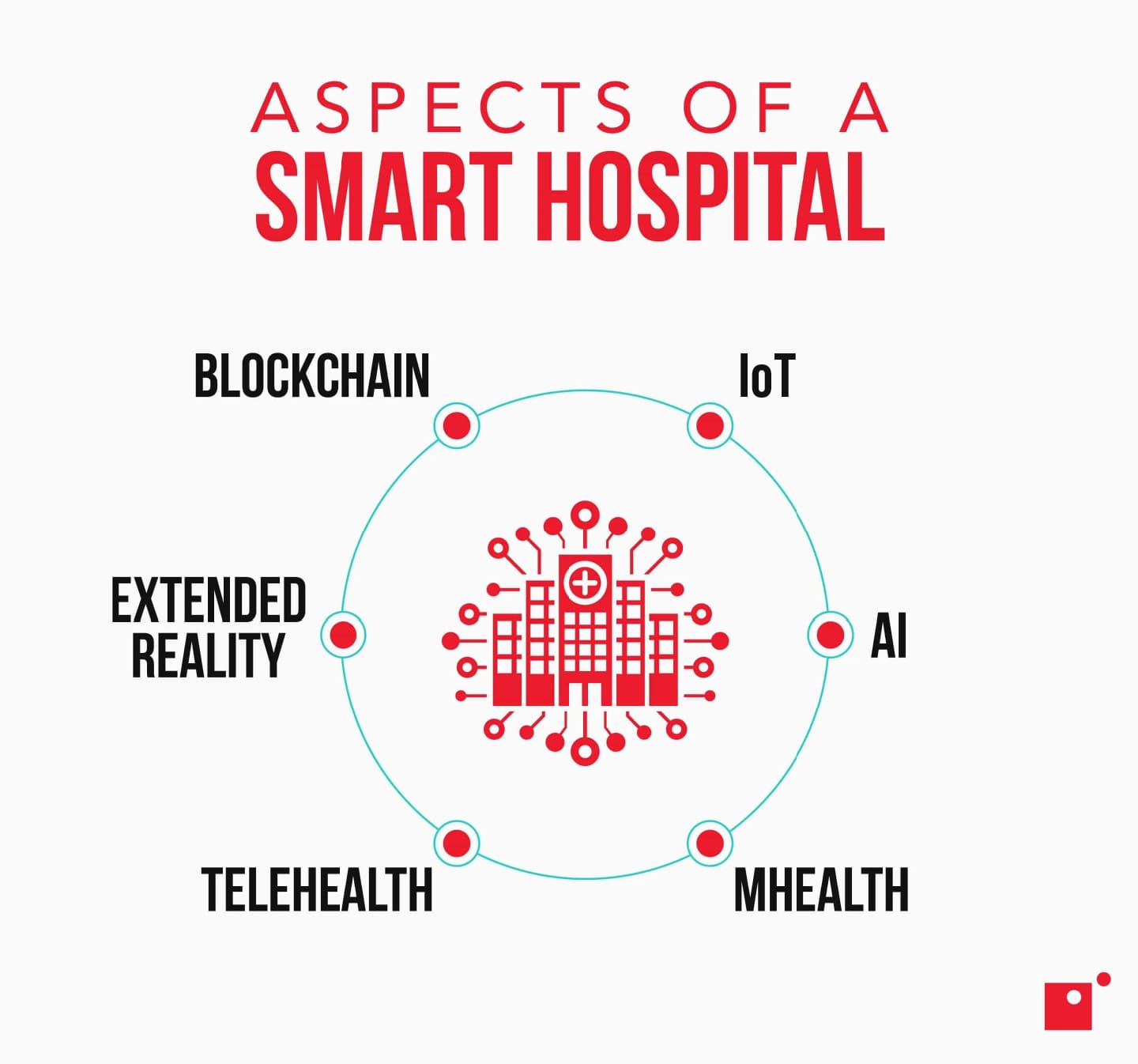
The future of healthcare is increasingly moving towards using a series of sophisticated technologies such as:
In the realm of smart hospitals and digital transformation in healthcare, the Internet of Things serves as a driving force. By allowing medical devices and sensors to communicate with one another, hospitals gain real-time insights into patient health. This facilitates something we covered earlier, remote patient monitoring, allowing healthcare providers to track vital signs, manage chronic conditions, and intervene proactively.
Additionally, IoT streamlines hospital operations by optimizing asset tracking – ensuring medical equipment availability and functionality. Energy management is also improved, with IoT systems self-regulating energy consumption for cost-efficiency.
Lastly, patient flow within the hospital is also enhanced as IoT-enabled systems track movements, minimizing wait times and improving overall operational efficiency.
IoT forms the foundation for smart hospitals, fostering connectivity and data exchange for better patient care and operational excellence.
Artificial Intelligence
Artificial Intelligence stands at the forefront of innovation, and smart hospitals are no exception. AI's capacity to analyze vast datasets expedites diagnostic processes, aiding healthcare professionals in making accurate and timely decisions.
This technology also powers predictive analytics that enable the identification of potential health risks, giving patients more preventative care options. On the patient-experience side of things, AI-driven chatbots and virtual assistants enhance patient engagement, providing instant responses to queries, appointment scheduling, and very basic advisory ability.
Specialty clinics can also use smart technology to track patient progress, flag changes earlier, and make follow-up care more consistent.
For example, a cardiology, physical therapy, or chronic care clinic may use remote monitoring data, automated reminders, and connected records to keep care teams informed between visits.
On the administrative front, AI automates tasks like billing and data entry, streamlining operations. This not only frees up valuable time for healthcare providers but also contributes to a more efficient and patient-centric healthcare environment.
AI plays the role of the cognitive powerhouse here, augmenting healthcare capabilities and improving outcomes across the board.
MHealth
Mobile Health (MHealth) is a pillar when it comes to patient-centric care in smart hospitals. With the widespread popularity of smartphones, MHealth applications empower patients to actively participate in their well-being.
Remote patient monitoring becomes seamless, as individuals can track health metrics and share real-time data with healthcare providers. Telehealth services also walk hand-in-hand with MHealth as the two facilitate one another.
Health and wellness apps on mobile devices offer personalized fitness tracking, nutritional guidance, and mental health support, promoting preventive care. Plus, MHealth allows patients to more easily manage their medication and prescriptions.
For community health centers, mobile health tools can help patients stay connected to care even when transportation, work schedules, language barriers, or other access challenges make in-person visits more difficult.
By making certain aspects of healthcare more readily accessible, MHealth transforms healthcare into a personalized and accessible experience, extending beyond the hospital walls.
Telehealth
Telehealth, a key component of smart hospitals, redefines communication in healthcare through digital transformation and improved technologies. The primary advantage telehealth brings to the table is the ability to overcome geographical constraints, ensuring healthcare access to a broader population.
Through video consultations and remote monitoring, telehealth enhances patient-physician interactions, facilitating timely interventions and reducing the need for physical hospital visits. The cost-efficiency of telehealth is evidenced by reduced travel expenses and optimized resource utilization.
Telehealth can also benefit patients managing chronic disease through regular virtual check-ins, personalized care plans, and daily reminders.
In a general practice setting, telehealth can make follow-up visits, prescription checks, care plan reviews, and routine questions easier for both patients and providers. Instead of requiring every interaction to happen in person, practices can use secure video visits, patient portals, and digital intake forms to keep care moving between appointments.
Additionally, telehealth serves a critical role in emergency situations, providing quick access to medical advice. Ultimately, telehealth fosters healthcare accessibility, efficiency, and continuity beyond traditional healthcare settings.
Extended Reality (AR and VR)
Extended Reality (AR and VR) technologies offer immersive and innovative solutions in smart hospitals and in training the future of healthcare professionals.
In medical training, AR overlays digital information onto the real world, creating realistic simulations for surgical procedures and enhancing the learning experience. VR, on the other hand, provides a completely immersive environment, beneficial for pain management during medical procedures and rehabilitation exercises.
The visual and interactive nature of AR and VR technologies also largely aid in surgical planning, offering surgeons a detailed and three-dimensional view. These technologies not only enhance professional education but also contribute to patient care experiences by minimizing pain and improving engagement in rehab processes.
AR and VR bring immersive and interactive experiences that enhance medical operations, healthcare education and training, and the patient experience.
Blockchain
Blockchain technology introduces a layer of security and transparency to healthcare data management in smart hospitals. It ensures the integrity of patient records through its decentralized and tamper-resistant nature, safeguarding against unauthorized access and data manipulation.
Interoperability is enhanced as blockchain facilitates secure sharing of health information across disparate systems, promoting seamless collaboration. In supply chain management, blockchain is employed to trace the authenticity and distribution of pharmaceuticals and medical devices, ensuring transparency.
Smart contracts, automated and secure agreements facilitated by blockchain, streamline processes like insurance claims and billing, reducing administrative complexities.
Blockchain reinforces data security, interoperability, and efficiency, contributing to the trustworthy and streamlined operation of smart hospitals. Although, it’s worth noting that compliance requirements also play a major role in data security among healthcare organizations.
5. AI in Healthcare
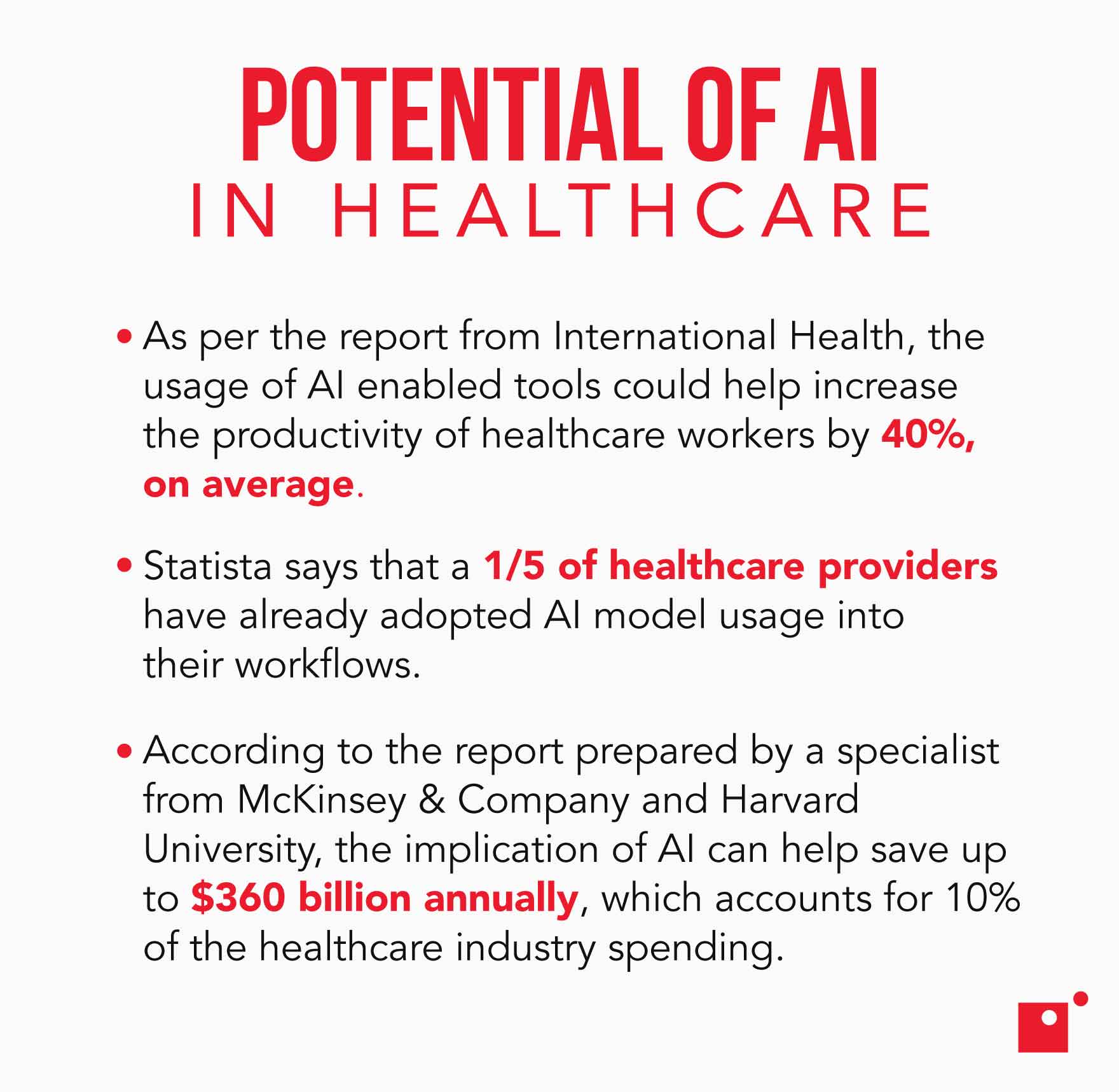
As mentioned above, AI will be a major player in smart healthcare, but this technology can also help providers make more informed decisions and greatly improve patient care with proactive care predictions, quicker data analysis, and accelerated diagnosis.
Using trained AI to recognize and diagnose certain diseases within test results can greatly increase the number of patients being processed and diagnosed, reducing wait times significantly.
Healthcare AI Solutions that Meet Your Needs Without Draining the Budget
The problem isn’t that AI in healthcare is too expensive; it’s that too many organizations are spending on it without a clear plan. From rushed implementations to poorly integrated systems, the real cost of AI often comes from misalignment between the technology and the actual needs of the care environment. Without a defined use case, even the most advanced tools can become expensive distractions.
Take predictive analytics platforms, for example. When deployed without clean, structured data or a clear clinical workflow, they often produce insights that go unused.
Similarly, AI-powered scheduling tools may promise efficiency but fail to deliver if they don’t account for the nuances of provider availability, patient preferences, or other existing constraints. These misfires both drain budgets and introduce complexity.
For healthcare organizations, AI can also support less visible but still important parts of the patient experience.
It can help with appointment scheduling, patient communication, documentation, reporting, billing workflows, and administrative task management.
These uses may not feel as futuristic as AI-assisted diagnostics, but they can have a real impact on how quickly teams respond, how smoothly patients move through the system, and how much time staff can spend on higher-value work.
The key is starting with the operational problem first, then choosing the AI solution that fits. A thoughtful AI consulting strategy can help healthcare leaders identify the right use cases, avoid unnecessary complexity, and build tools that support both staff and patients.
It also requires cross-functional buy-in from IT to frontline staff, to ensure the solution is usable, scalable, and actually improves outcomes. When AI is implemented with precision and purpose, it saves money and drives measurable value.
Wrapping Up on Smart Technology and Digital Transformation in Healthcare
The healthcare industry is in the midst of a total metamorphosis driven by smart technology and digital transformation.
Smart tech and digital transformation in healthcare are paving the way into the future and flipping the whole game on its head. With more monitoring, higher accessibility, and a wider variety of treatment options available, physicians can use AI-powered data analysis, smart monitors, and other innovative tools and technologies that promote a more proactive, data-driven approach to healthcare.
Taking a more proactive, preventative, and data-driven approach to healthcare services will translate to real lives being saved every single day.
Andrew Mancini is a Content Writer for Impact's in-house marketing team, where he plans content for the Impact insights hub, manages the publication schedule, drafts articles, Q&As, interview narratives, case studies, video scripts, and other content with SEO best practices. He is also the main contributor on a monthly cybersecurity news series, The Security Report, researching stories, writing the script, and delivering the report on camera.