Tapestry 360 Health: Keeping Care Within Reach for Chicago’s North Side
Learn how Tapestry 360 Health strengthened its IT infrastructure, moved to a more secure cloud-based environment, and supported reliable care across clinics.
Case Study
10 minute read
Jun 24, 2026
Across 15 clinics on Chicago’s North Side and in nearby suburbs, Tapestry 360 Health serves more than 28,000 patients each year, many of whom face barriers that make routine care difficult to access.
Some are uninsured. Some are newly arrived immigrants or refugees. Others are adults navigating chronic conditions, social service needs, or the rising uncertainty of healthcare coverage.
But no matter who walks through the door, Tapestry 360 Health’s mission remains clear.
“We will see anyone, regardless of their ability to pay,” said Jeneba Winfrey-Porter, Chief Operating Officer at Tapestry 360 Health. “We try and really meet our community exactly where they are.”
As federal funding, Medicaid access, and healthcare affordability continue to shift, organizations like Tapestry 360 Health have become an essential safety net for patients who might otherwise go without care.
But being this safety net takes more than compassion. It takes operational strength, reliable systems, secure infrastructure, trusted partnerships, and a team that can keep care moving even when resources are limited.
Courtney Mapes, Chief Medical Officer at Tapestry 360 Health, said their role has become even more critical as more people lose access to insurance or affordable care.
“We serve everyone,” Courtney said. “Whether they have insurance or not. We will see you in our clinic, and we're seeing more and more people that don't have insurance or don't have access to insurance or health care. We become the safety net where they can come and still receive services when maybe they've lost the services from somewhere else.”
That is where Tapestry 360 Health’s story becomes bigger than healthcare. It becomes a story of collaboration and the quiet technology decisions that help protect patient care.
The Hidden Infrastructure Behind Better Care
Tapestry 360 Health’s work begins with primary care and extends into community-based care, school-based healthcare, integrated behavioral health, wellness services, and support that spans from pregnancy and infancy through older adulthood.
For patients who face barriers outside the exam room, Tapestry 360 Health’s team often has to think beyond a diagnosis or prescription.
“It’s not just medicine that we’re delivering. It’s social services that many times people need,” Courtney said.
That could mean helping a patient figure out how to afford medication, connecting someone with food, housing support, or transportation, or making sure a child receives vaccines or an adult gets a critical cancer screening.
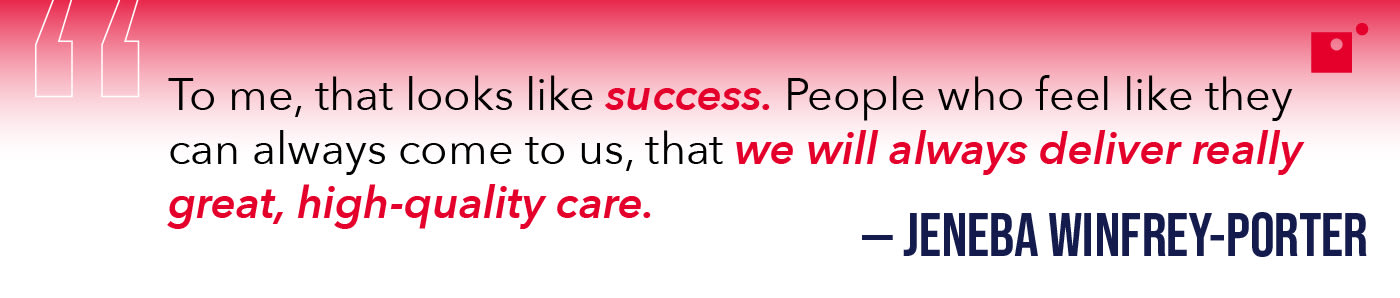
Jeneba Winfrey-Porter described success as becoming a long-term trusted partner for healthcare on Chicago’s North Side. She recalled being stopped by someone who said they had not lived in the neighborhood for years but would “forever be a Tapestry 360 Health patient.”
Tapestry 360 Health’s patient satisfaction reflects that trust. Jeneba noted that more than 90% of patients say they love the organization, want to come back, and would refer others to Tapestry 360 Health.
Behind every appointment, screening, referral, and patient interaction is an operational engine that has to work.
For Tapestry 360 Health, that engine includes a small internal team of around four people led by Scott Simpson, IT Director. Scott also manages relationships with vendors and partners that help keep the organization running.
As a federally qualified health center (FQHC), Tapestry 360 Health does not have the luxury of a large internal IT department or endless resources. But it still has the same serious technology needs as any healthcare organization: reliable systems, secure access to electronic medical records, stable hardware, protected patient data, and infrastructure that can support clinicians and staff across multiple locations.
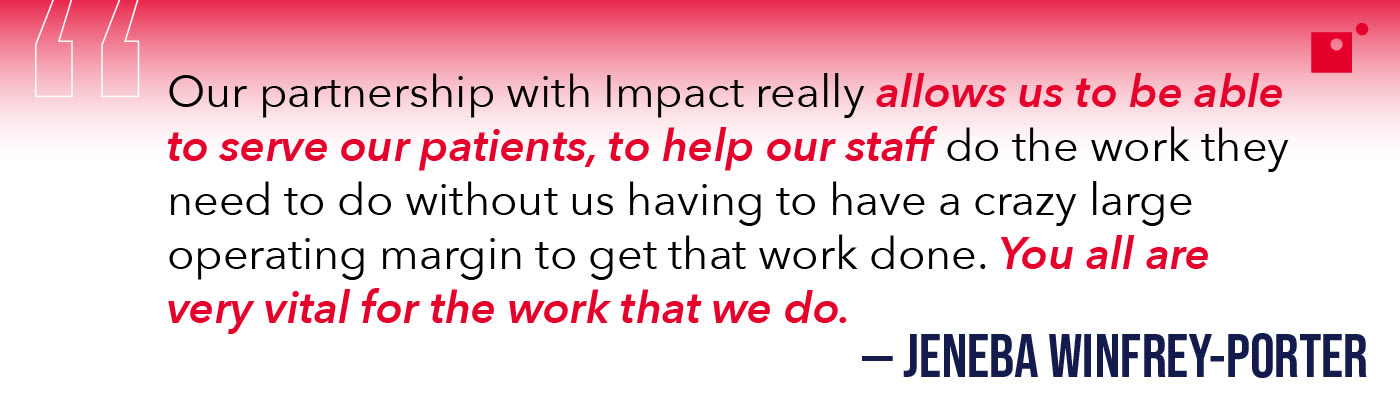
At Tapestry 360 Health, Impact provides the kind of robust help desk, infrastructure, and technology support that allows the team to focus on care instead of disruptions.
“You allow us to not think about those things,” she said. “Which for me is the most important part of a partnership, is that just helping us do our day-to-day work.”
For Scott, the value comes from having access to expertise beyond what a small internal IT department can realistically maintain on its own.
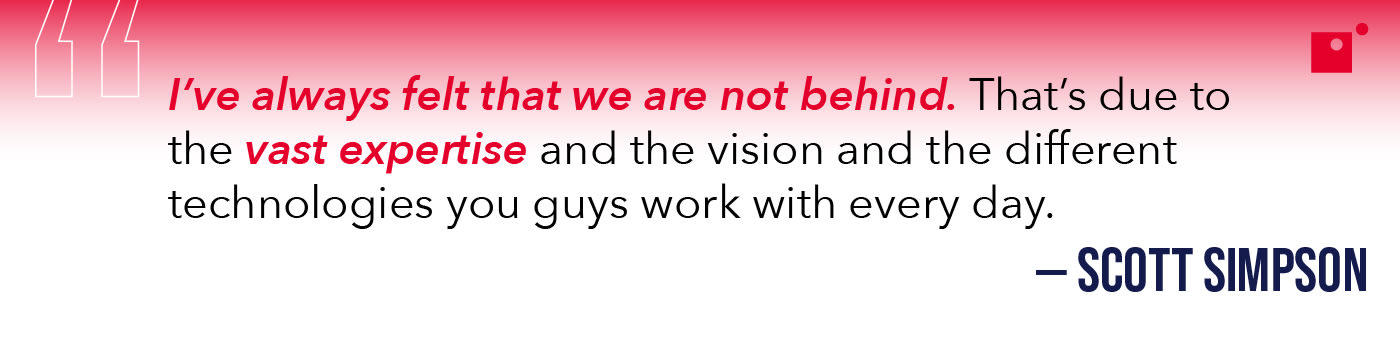
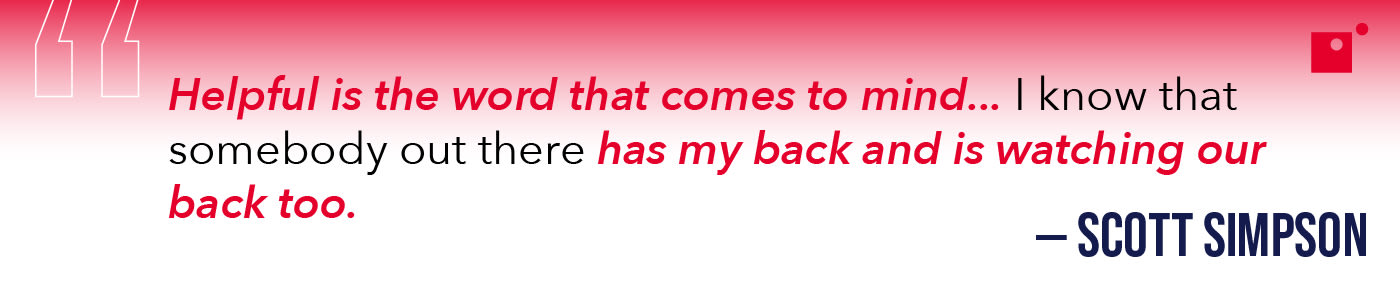
“I lean on the expertise and the experiences of our partners,” Scott said. “Having a partner that’s not just focused on us, but also has vast experience in different organizations, different industries… it just opens the door for us to have a more robust environment.”
A Partnership That Feels Like Part of the Team
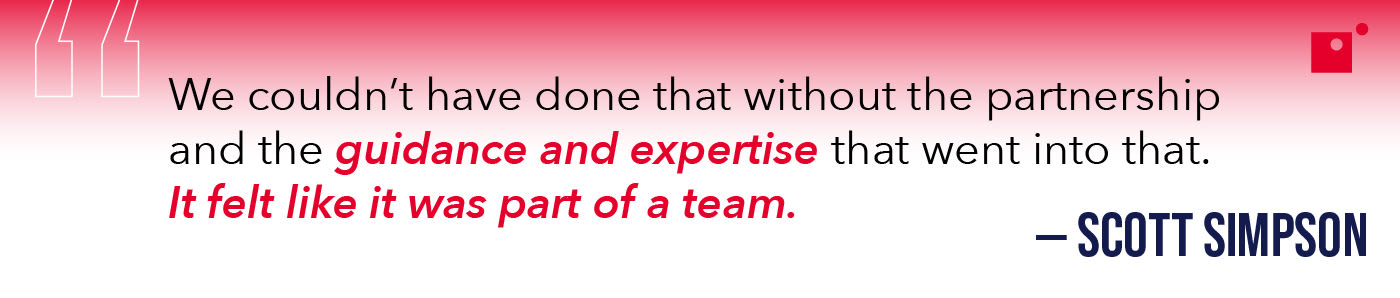
For Tapestry 360 Health, the right technology partner could not simply show up with recommendations and disappear. They needed a team that understood their mission, their constraints, their patients, and the reality of delivering healthcare in a resource-conscious environment and then do the work on a day-to-day basis.
Impact’s client experience team took the time to understand Tapestry 360 Health’s unique service model.
“They feel like an extension of our Tapestry 360 Health team, not just an external vendor that we meet with from time to time,” Jeneba said.
That extension matters in daily operations. When Scott needs help navigating a technology issue, he knows exactly who to call. When the organization is considering a hardware decision, security recommendation, or strategic roadmap, there is already a trusted line of communication.
Moving to a More Secure Future
One of the clearest examples of that partnership was Tapestry 360 Health’s move from on-premise servers to a serverless, cloud-based environment. The project represented a major step forward in stability and patient protection.
“[The thing] I’m most proud of our partnership is moving from a server to moving to a serverless environment and getting all our on-premise servers… on the cloud,” Scott said. “That just provided us a much more secure and stable environment.”
In healthcare, secure infrastructure is not just an IT priority. It is a patient safety priority.
Tapestry 360 Health handles personal health information every day, and Scott said knowing that the organization had a more secure environment was “a huge thing.”
The process required planning, communication, project management, and flexibility. Scott described how Impact presented the idea, explained why it was the right move, organized the project, guided timelines and deliverables, and kept the work moving through regular meetings and open communication.
Impact also helped Tapestry 360 Health communicate internally with staff and providers who were not living inside the technical details of the transition.
“Impact really helped us… shape that narrative to explain why this is important, why to dedicate the time for this changeover,” Jeneba said.
Most importantly, the project had to be done without disrupting patient care. Jeneba said there were moments when the plan needed to shift to better fit the realities of a clinical environment.
“Impact worked with us and we said, ‘Hey, that’s not going to work for this doctor. Let’s try something different.’ Let’s add this other element to help make sure that this is a smooth transition that doesn’t disrupt patient care,” said Jeneba.
That flexibility is what made the partnership work. The technology mattered. But so did the people relying on it.
Keeping Tapestry 360 Health Ahead Without Losing Sight of the Mission
In healthcare, standing still is not an option. Security threats evolve. Hardware ages. Software changes. Compliance needs grow. Patient expectations shift. But for an organization like Tapestry 360 Health, every technology investment has to be balanced against budget realities and mission-critical priorities.
That is where strategic guidance becomes essential.
“You all really work hard in trying to be forward focused and saying, ‘Okay, this is where you are now. Let’s talk about where you want to get to,’” Jeneba said.
That forward-looking approach has helped Tapestry 360 Health identify bottlenecks, evaluate technologies, and make safer, smarter decisions. Impact has also supported conversations with Tapestry 360 Health’s finance, operations, risk, and safety teams.
“Having somebody that’s looking over the entirety of our timeline is a great help,” Scott said.
That perspective has helped Tapestry 360 Health stay ahead. Jeneba noted that in conversations with other partners, she has realized that Tapestry 360 Health is further along than many organizations when it comes to security and cloud-based infrastructure.
“I really attribute that a lot to the work we do with Impact,” she said.
That forward movement is visible in the organization’s hardware, network equipment, software decisions, and cybersecurity.
Making Every Dollar Work Harder
Budget is always part of the conversation for Tapestry 360 Health. As an FQHC, the organization must be thoughtful about where every dollar goes. Impact helps Tapestry 360 Health plan investments around what is necessary to continue serving patients, sustain operations, and protect the organization.
“We don’t have a big pot of money waiting in the back to say we’re going to purchase all these things this year,” Jeneba said. “Helping us really plan out what we need to do to continue to serve our patients… has been very helpful.”
Sometimes, that support shows up in practical ways. Jeneba recalled a laptop warranty recommendation that helped Tapestry 360 Health extend coverage and space out hardware refreshes in a way that better aligned with their budget.
“Let’s do a five-year warranty,” she said. “It gives us a little bit more coverage and then allows us to refresh our hardware as need be, but in a more spaced-out time frame that works for our budget.”
For the IT department, the value is in prioritization. Tapestry 360 Health may want to pursue several projects, but Impact helps them identify which investment should come first based on patient safety, security, and operational need.
“We want to do all these things, but we can only pick one,” Scott said. “Which ones are the most important? Which ones are going to be the most help with first patient safety or security?”
Supporting the Story Beyond the Clinic
Tapestry 360 Health’s mission also depends on visibility, community engagement, fundraising, and storytelling.
Raven Hibbler—Director of Marketing, Public Relations, and Communications—said she was drawn to Tapestry 360 Health because of its school-based health centers and its ability to bridge gaps in care for diverse communities across the North Side.
Raven helps tell the stories of Tapestry 360 Health’s patients, staff, and community impact. That storytelling plays a major role in fundraising events like the organization’s golf outing and gala, which help expand Tapestry 360 Health’s reach and bring new supporters into the mission.
Those events help connect with people who may not personally need Tapestry 360 Health’s services but want to support those who do.
“They help us bring people in who normally wouldn’t interact with us,” Jeneba said. “Maybe they don’t normally need our services, but they want to help the people that we help.”
Impact has also supported Tapestry 360 Health’s events through branding, print materials, programs, signage, gift bags, and other event assets.
For Impact, supporting Tapestry 360 Health’s events is another way to contribute to the larger mission. Michael Giardina, Vice President of Client Experience at Impact, described the events as a morale boost.
He said: “Our work is helping with the greater good. While we don’t have the skill set to do what Tapestry 360 Health does for their patients, we can provide our skills to enhance what they do and how they do it.”
The Real Measure of Success
Tapestry 360 Health measures its relationship with Impact in several ways: help desk performance, successful projects, security improvements, hardware planning, and operational simplicity.
But the most meaningful measure may be this: Tapestry 360 Health’s team can spend more time focused on patients.
“We are really making the day-to-day for our staff really simple, and you all are doing the complex things for us,” Jeneba said.
Scott measures success by whether his team is freed from getting bogged down by tasks that can be handled through the partnership.
“As long as my team can focus on more of the patient-centric tasks or patient-centric issues that’s a way I look at success,” Scott said.
When asked what it is like to work with Impact, Jeneba said the team is welcoming, integrated, and deeply invested in understanding Tapestry 360 Health’s needs.
“You all really spend time trying to know us and know what will solve our problems,” she said. “You’re definitely integrated into our day-to-day work and our day-to-day life.”
For Tapestry 360 Health, that support matters because the stakes are bigger than IT tickets, hardware refreshes, or cloud migrations.
The stakes are patients who need care, families trying to navigate healthcare without insurance, students receiving care in school-based clinics, providers and staff who need reliable systems to do meaningful work, and communities on Chicago’s North Side that deserve access to healthcare delivered with dignity, creativity, and compassion.
“Everybody deserves healthcare. It should be a right for everybody. And that’s our goal,” said Courtney.
Lauren Hando
Copywriter
Lauren Hando is a Copywriter for Impact's in-house marketing team. She writes, edits, and reviews copy for a variety of mediums—including print, digital, video, social, paid ads, sales collateral, and more—to motivate the target audience and support the sales team.