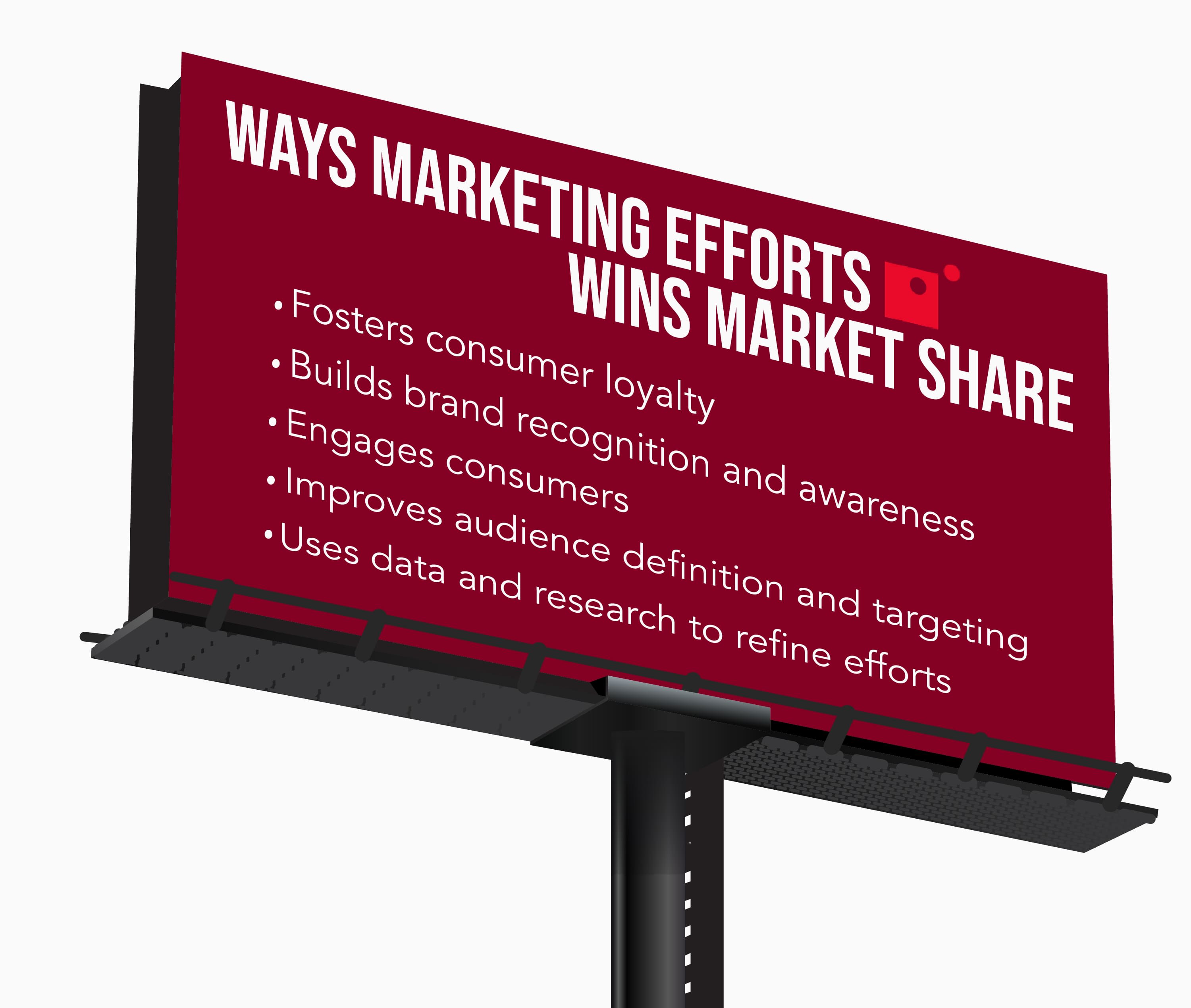
Winning over consumers is getting harder and harder every single year. This is largely due to the volume of competition that organizations have to deal with in any given industry, but is also perpetuated by the rise of social media, online shopping, and instant access. All-in-all, this has led to brands relying on engaging consumers through marketing efforts in order to win a larger market share.
If you take a moment to think about some of your favorite brands, there’s a good chance that a specific commercial, social media post, or podcast comes to mind. This demonstrates the longevity of a strong marketing campaign and how powerful brand messaging can be if it resonates with the intended audience.
Join us below as we explore all the ways in which brands can leverage their marketing efforts to refine their campaigns, deliver more relevant content to target audiences, and ultimately, win a larger market share.
Watch Impact’s webinar, Scientific Marketing: Transforming Bold Ideas Into Bottom-Line Results, for more information on creating marketing campaigns that resonate with your audience.
Building Marketing and Sales Alignment
Marketing and sales often operate in silos, but when they work together, the impact on market share can be transformative. Alignment ensures that both teams share common goals, understand each other’s processes, and collaborate on strategies that drive revenue.
Why alignment matters:
- Unified messaging: When marketing and sales speak the same language, prospects receive consistent communication throughout the buyer journey.
- Better lead quality: Marketing can tailor campaigns to attract leads that fit the sales’ ideal customer profile, reducing wasted effort.
- Shorter sales cycles: Coordinated efforts mean prospects are nurtured effectively before they reach sales, accelerating conversions.
A few tips on achieving alignment:
- Define shared KPIs: Agree on metrics like lead-to-opportunity conversion rates and revenue targets.
- Regular communication: Hold joint meetings to review pipeline health and campaign performance.
- Leverage technology: Use CRM and marketing automation tools to share data and track progress in real time.
When marketing and sales operate as a single revenue engine, businesses can capture more market share by converting leads into loyal customers faster and more efficiently.
The Role of Brand Awareness in Winning Market Share
Brand awareness plays a pivotal role in winning market share by ensuring that consumers recognize, recall, and trust a brand when making purchasing decisions. When people are familiar with a brand, they are more likely to choose it over competitors, especially in crowded markets.
A strong brand presence builds credibility and evokes positive associations, making potential customers feel confident in their choices. As a result, high brand awareness can help drive organic growth, boost word-of-mouth marketing, and increase sales without the need for aggressive promotions.
Moreover, effective brand awareness campaigns differentiate a brand from competitors by highlighting unique selling points.
This not only attracts new customers but also helps retain existing ones, reinforcing loyalty. In competitive industries, brands that stay top-of-mind are better positioned to capture market share when consumers are ready to make a purchase. This is especially the case as consumers want to shop what they know before anywhere else.
Ultimately, sustained brand awareness keeps a business relevant, visible, and trusted, giving it a competitive edge in capturing a larger market share.
How Content Marketing Resonates With Consumers
Content marketing resonates with consumers by offering valuable, relevant, and engaging information that meets their needs and interests.
Instead of focusing on direct selling, it builds a connection by educating, entertaining, or solving problems for the audience. This approach fosters trust and positions the brand as an authority in its industry, making it the go-to resource for information.
When consumers feel that a brand understands their challenges and provides helpful content, they are more likely to engage with the brand and consider its products or services.
In winning a larger market share, content marketing serves as a key differentiator. By consistently delivering high-quality content, brands can capture the attention of potential customers at different stages of the buying journey, from awareness to decision-making.
Whether through blog posts, videos, or social media, content marketing draws in new audiences, nurtures leads, and increases customer loyalty. As a result, brands with strong content strategies are more likely to convert casual consumers into loyal customers, giving them an edge in expanding market share over competitors who rely solely on traditional advertising.
Using Data and Market Research to Your Advantage
Brands use data, market research, and marketing tech to craft targeted and effective marketing strategies by gaining a deep understanding of consumer behavior, preferences, and emerging trends.
Through data analysis, brands can track customer interactions across various platforms, analyze purchasing patterns, and identify key demographics. This insight allows them to tailor their messaging, offers, and campaigns to specific audience segments, increasing the chances of engagement and conversion.
By using data, brands can refine marketing efforts such that it’s highly focused, delivering relevant content to the right people at the right time and on the right platform.
Market research complements data-driven strategies by uncovering insights into competitor actions, industry shifts, and customer expectations. Surveys, focus groups, and social listening help brands understand what resonates with their audience and how their competitors are performing.
This research allows brands to spot gaps in the market, refine their value propositions, and anticipate consumer needs. By combining data and research, brands can make informed decisions, optimize their marketing spend, and continuously improve their strategies, bringing about long-term success and ultimately winning a larger market share.
Ultimately, data and market research empower brands to create agile and responsive marketing strategies, allowing them to adapt quickly to changes and stay competitive in dynamic markets.
The Importance of Attribution and Measurement
Marketing isn’t just about launching campaigns—it’s about proving their effectiveness. Attribution and measurement provide the visibility needed to understand which efforts drive results and which need refinement.
Attribution helps identify the channels and touchpoints that influence conversions, ensuring resources are invested where they matter most. Measurement complements this by turning raw data into actionable insights, moving beyond vanity metrics like impressions or clicks to focus on revenue impact.
Key benefits of strong attribution and measurement include:
- Pinpointing high-performing channels for smarter budget allocation
- Revealing the full buyer journey through multi-touch attribution
- Connecting marketing activities to actual revenue with closed-loop reporting
Modern analytics tools make this process even more powerful, offering real-time dashboards that allow teams to adjust campaigns on the fly. When attribution and measurement are done right, marketing becomes a science—every decision backed by data, every dollar spent with purpose.
How Marketing Creates Repeat Customers
Marketing plays a crucial role in creating repeat customers by nurturing relationships, delivering a high-quality experience, and fostering brand loyalty. Personalized marketing strategies, such as targeted email campaigns or loyalty programs, make customers feel valued and understood.
By offering tailored recommendations, exclusive discounts, or rewards for repeat purchases, brands keep customers engaged and incentivize them to return. These personalized touches create positive experiences that build trust and make customers more likely to choose the brand again.
Consistency in messaging and delivering on brand promises is another key factor. A cohesive marketing strategy across all touchpoints—whether on social media, websites, or email—reinforces the brand’s identity and values, making it memorable. When customers have a consistently positive experience, they associate the brand with reliability and quality.
Over time, this reinforces a sense of familiarity and comfort, encouraging repeat purchases. Marketing that emphasizes customer satisfaction, such as follow-up emails, surveys, or offering stellar post-purchase support, can also strengthen loyalty by showing that the brand cares about the entire customer journey and not just the purchase.
Additionally, marketing can create a community around a brand, making customers feel like they are part of something bigger. Engaging content, social media interactions, and user-generated content campaigns invite customers to actively participate in the brand’s story.
This sense of belonging not only drives repeat business but also turns loyal customers into brand advocates, amplifying word-of-mouth marketing and attracting new customers.
AI’s Role in Improving Sales Through Amplified Marketing
Artificial intelligence is already reshaping how businesses market and sell. By working with AI, companies can amplify marketing efforts, streamline processes, and ultimately drive more sales.
AI enhances marketing in several key ways:
- Personalization at scale: AI analyzes customer data to deliver highly targeted content and offers, making every interaction feel tailored.
- Predictive analytics: By forecasting trends and buyer behavior, AI helps teams anticipate needs and optimize campaigns before competitors catch on.
- Automated workflows: From lead scoring to email sequencing, AI reduces manual tasks, freeing teams to focus on strategy and relationship-building.
For sales teams, these capabilities translate into better-qualified leads, shorter sales cycles, and higher conversion rates. When marketing uses AI to deliver the right message at the right time, sales can engage prospects who are already primed to buy.
This results in a more efficient revenue engine where marketing and sales work in harmony—powered by data-driven insights and automation. Businesses that embrace AI are setting the pace for market share growth.
Final Thoughts on Growing Your Market Share with Marketing
Growing market share through marketing is a dynamic process that requires a strategic approach. By focusing on key elements such as brand awareness, content marketing, and personalized campaigns, businesses can effectively attract new customers while retaining existing ones.
Additionally, leveraging data and market research further bolsters the precision of marketing efforts, making sure that campaigns resonate with the right audience and bring about meaningful results.
Ultimately, businesses that commit to delivering value, maintaining consistency, and building strong relationships with their audience will be best positioned to expand their market share.
A well-executed marketing strategy not only differentiates a brand from its competitors but also fosters long-term loyalty, creating sustainable growth in an ever-evolving market.
For more information on using marketing to power your growth effectively, watch Impact’s webinar, Scientific Marketing: Transforming Bold Ideas Into Bottom-Line Results.