Sales strategies aren’t meant to last forever. What worked yesterday may not deliver results today, and ignoring the signs can cost your business growth, revenue, and market share. Shifts in buyer behavior, evolving technology, and competitive pressures all demand a fresh look at how you sell.
The question isn’t if you’ll need to adjust your approach, but when.
In this guide, we’ll explore the signals that indicate it’s time for change, how to build a strategy that aligns with your goals, and practical frameworks to keep your sales plan agile and effective.
The companies that thrive are the ones that adapt quickly. A strong sales strategy is not just about hitting targets; it’s about anticipating change and staying ahead of the curve. If your current approach feels reactive instead of proactive, it may be time to rethink how you engage prospects and convert leads.
More often than not, the modern sales cycle includes a variety of connected platforms, but it’s not always easy for the employee. Learn how to onboard tech successfully in Impact’s webinar, Why Your Tech Rollouts Fail (and What to Do About It).
Signs You Need a More Effective Sales Strategy
If your sales results have stalled or declined, the problem may not be your team’s effort but the strategy guiding them.
Common warning signs include:
- Sales cycles are getting longer: Deals take more time to close, often because your process isn’t aligned with buyer expectations.
- Data lives in too many places: Fragmented systems make it hard to see performance clearly, slowing decision-making and limiting insights.
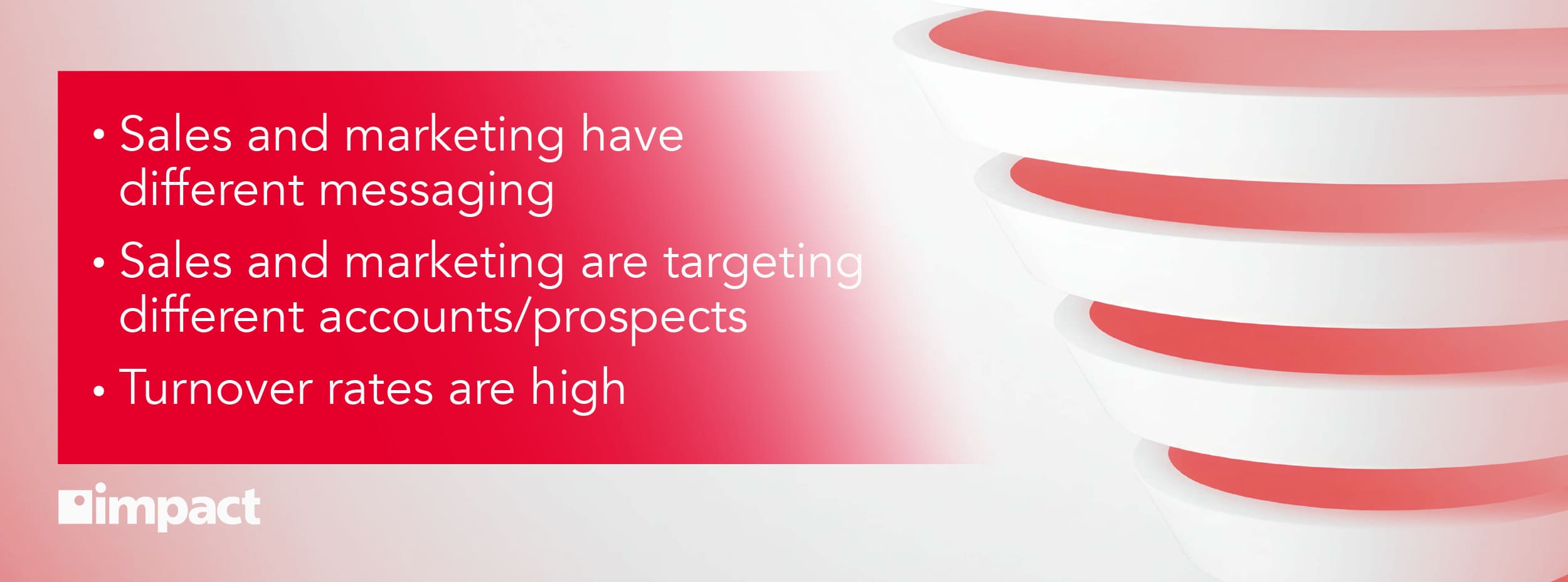
- Messaging feels misaligned: When sales and marketing tell different stories, prospects notice, and trust erodes quickly.
- Brand promises aren’t being delivered: If customers feel let down after the sale, churn rises, and long-term growth suffers.
- Your team is stuck in old habits: Outdated scripts and resistance to new tools make it harder to meet modern buyer expectations for personalization and speed.
These issues often compound over time. Longer sales cycles can frustrate prospects and increase the risk of losing deals to competitors who move faster. Disparate data systems create blind spots, making it difficult to identify which tactics work and which don’t.
Without a unified view of performance, your team is essentially navigating without a map, which leads to missed opportunities and inefficient resource allocation.
Misaligned messaging and broken brand promises are even more damaging because they erode trust at critical points in the buyer journey. When marketing sets expectations that sales cannot fulfill, prospects feel misled, and that perception lingers long after the deal closes. Same with promises sales make that the service providers can’t fulfill.
Combine that with a team clinging to outdated methods, and you have a strategy that feels reactive instead of proactive. Addressing these flaws early is essential to restoring momentum and building a foundation for sustainable growth.
Building a Sales Strategy and Plan
A strong sales strategy starts with clarity. Before you think about tactics, you need a clear understanding of your target market, your ideal customer profile, and the problems you solve better than anyone else. Without this foundation, even the most aggressive outreach will fall flat because it lacks direction.
Next, focus on alignment. Sales and marketing should operate as partners, not silos. When messaging is consistent across channels, prospects experience a seamless journey from awareness to purchase. This means agreeing on shared definitions, like what qualifies as a lead, and creating content that supports every stage of the funnel.
Misalignment here doesn’t just slow deals, it creates confusion that actively loses you market share.
Finally, build flexibility into your plan. Markets shift, buyer expectations evolve, and technology changes fast. A rigid strategy will break under pressure, so design processes that allow for quick adjustments.
Incorporate regular reviews, data-driven insights, and feedback loops that keep your team proactive instead of reactive. The goal isn’t just to hit this quarter’s numbers; it’s to create a system that scales and adapts as your business grows.
Aligning Sales and Marketing
Sales and marketing alignment is a business imperative. When these teams operate in silos, the customer experience suffers. Prospects hear one message during the awareness stage and a completely different one when they engage with sales. That disconnect creates confusion, slows down decision-making, and often leads to lost deals.
True alignment starts with shared goals and definitions. Both teams need to agree on what qualifies as a lead, how success is measured, and which metrics matter most. This clarity ensures marketing campaigns attract the right audience and sales conversations build on that foundation. Regular communication, through things like joint planning sessions, shared dashboards, and feedback loops, keeps everyone moving in the same direction.
Consider the impact of consistent messaging. When marketing sets expectations that sales can deliver on, trust grows. Prospects feel confident in what they’re buying because every interaction reinforces the same value proposition. Companies that achieve this level of alignment often see shorter sales cycles, higher conversion rates, and stronger customer relationships.
It’s about creating a unified approach that feels seamless to the buyer.
Using a Framework for Sales Strategy
A framework gives structure to your sales strategy, turning broad goals into actionable steps. Without one, it’s easy to fall into reactive decision-making, chasing short-term wins instead of building a sustainable system. The right framework helps you define priorities, allocate resources effectively, and measure progress with clarity.
Start by identifying the core components of your strategy: target market, value proposition, sales process, and performance metrics. Each element should connect back to your business objectives. For example, if your goal is to shorten sales cycles, your framework might emphasize lead qualification criteria and automation tools that speed up follow-ups.
Popular models like SPIN Selling, MEDDIC, or the Sales Funnel Framework can serve as starting points, but the most effective approach is one tailored to your organization. Combine proven methodologies with insights from your own data to create a system that fits your market and team. A good framework isn’t static—it evolves as buyer behavior, technology, and competitive landscapes change. Regular reviews ensure your strategy stays relevant and keeps your team focused on what matters most.
Key Takeaways on Building a Sales Strategy
A successful sales strategy is built on clarity, alignment, and adaptability. Keep these principles in mind as you refine your approach:
- Watch for warning signs early: Longer sales cycles, fragmented data, and misaligned messaging are signals that your strategy needs attention.
- Start with clear objectives: Define your target market, ideal customer profile, and measurable goals before building tactics.
- Align sales and marketing: Consistent messaging and shared definitions create a seamless buyer experience and reduce friction.
- Use a framework for structure: Proven models or custom frameworks help turn broad goals into actionable steps and measurable outcomes.
- Stay flexible and data-driven: Regular reviews and feedback loops ensure your strategy evolves with market changes and customer expectations.
A well-designed sales strategy is more than a roadmap—it’s a living system that adapts as your business grows and your market shifts. Companies that invest in alignment, clarity, and continuous improvement don’t just hit their targets; they build resilience and trust that fuel long-term success. If your current approach feels reactive or outdated, now is the time to rethink, restructure, and set your team up for sustainable growth.
The technology you onboard should empower your employees, not hinder them. Learn how to more successfully onboard technology-based solutions in Impact’s webinar, Why Your Tech Rollouts Fail (and What to Do About It).