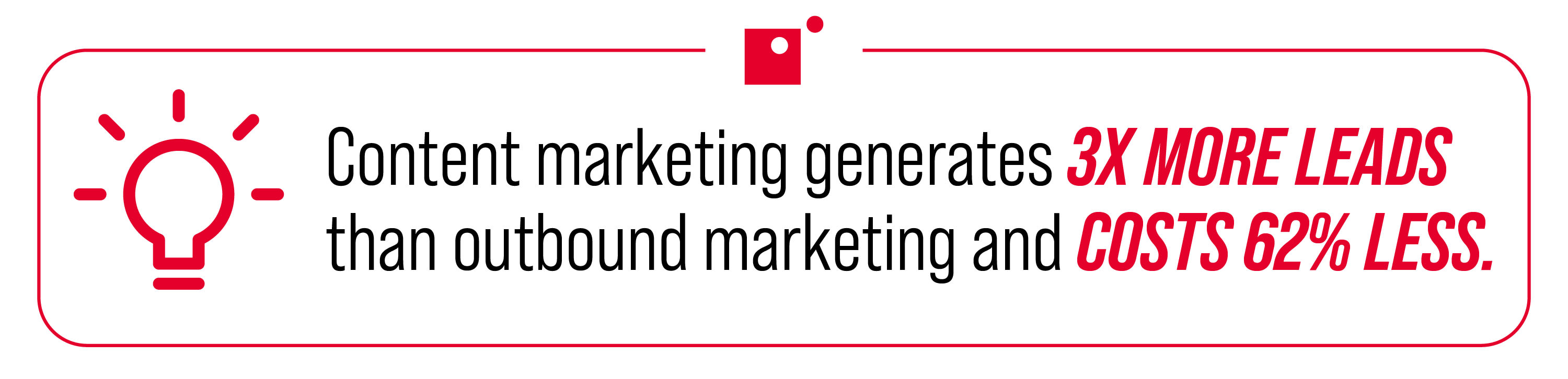
Content marketing has moved far beyond blog posts and brand awareness campaigns. When it’s done with intention, it becomes a measurable driver of revenue, customer expansion, and long‑term brand equity.
Businesses using content strategically aren’t just trying to stay visible online; they’re using it to create meaningful moments that help prospects trust them faster, stay engaged longer, and make better buying decisions.
Growth happens when content is tied directly to what the business is trying to achieve. That means understanding where your audience is in their journey, giving them resources that reduce friction, and shaping narratives that make your company the obvious choice.
From thought leadership and lead‑generation assets to customer stories and brand messaging, every piece plays a part.
Find out how you can better blend creative genius with strategy in Impact’s webinar, Scientific Marketing: Transforming Bold Ideas Into Bottom-Line Results.
Aligning Your Content Strategy with Business Goals
A content program only creates real business value when it’s anchored to clear objectives. Teams often jump straight into production—blogs, webinars, social posts—without defining what those assets are meant to influence.
Growth requires intention. Every piece should have a job.
Start by identifying the outcomes the business cares about most. For some teams, that means creating steady inbound demand. For others, it’s shortening sales cycles or strengthening trust in a crowded market.
Once the goals are clear, you can map content directly to the levers that support them.
A goal‑aligned content strategy typically focuses on three areas:
- Demand creation: Help people understand a problem, name it, and see your solution as a credible path forward.
- Demand capture: Equip buyers already in‑motion with the content they need to validate their decisions.
- Revenue enablement: Give sales, success, and product teams content that moves deals and customers forward.
With that structure in place, prioritization becomes easier. Instead of trying to publish everything, you invest in content that supports the metrics that matter—pipeline, conversion, expansion, and advocacy.
The shift isn’t about producing more; it’s about producing with clarity and purpose.
Aligned strategies not only drive results, they also help teams communicate impact internally. When stakeholders can see how specific content supports specific goals, content marketing moves from a “nice to have” to a measurable growth engine.
Using Content to Support the Customer Journey
Growth becomes far more predictable when content is built around how people actually move from problem‑aware to customer. Each stage of the journey has different needs, questions, and decision‑making behaviors. When your content addresses those moments directly, it reduces friction and keeps prospects moving.
Most journeys follow a simple pattern—awareness, consideration, decision, and post‑purchase. The role of content is to help prospects gain clarity at each point:
- Awareness: People are beginning to recognize a challenge or opportunity. They need clear explanations, industry context, and helpful insights that frame the problem. Educational blogs, guides, and short videos work well here.
- Consideration: Buyers are evaluating options and trying to understand what separates one solution from another. Comparison content, solution overviews, and webinars can show how your approach fits into their reality.
- Decision: Prospects want evidence. They look for proof points, success stories, ROI data, and anything that builds confidence. Product‑specific content, FAQs, demos, and case studies become essential.
- Post‑Purchase: Content doesn’t stop at the sale. Strong onboarding materials, adoption guides, and customer stories deepen engagement and turn satisfied customers into advocates.
When content is mapped to real buyer behavior, it becomes a guide—not just a series of assets. Prospects feel supported instead of “marketed to,” and internal teams gain a clearer understanding of what to provide at each step.
The strongest growth programs aren’t built on volume; they’re built on intention. A well‑structured journey ensures your content meets buyers where they are and helps move them where they need to go.
Thought Leadership that Resonates
Thought leadership resonates when it helps people see something familiar in a new light. It is not about bold predictions or trying to dominate a conversation. The impact comes from offering a perspective that feels grounded, useful, and unexpectedly clarifying.
Strong thought leadership usually starts with a clear point of view. Instead of repeating what the industry already agrees on, it identifies the tension points, the places where assumptions, habits, or accepted truths no longer match reality.
When you can articulate those gaps in a way that feels honest and practical, people pay attention.
Resonant ideas also stay close to real experience. They draw from patterns you have seen in your work, questions customers ask repeatedly, or insights that surface when teams struggle with the same challenges again and again. The more your perspective reflects lived experience rather than abstract theory, the faster audiences recognize its relevance.
What ultimately makes thought leadership memorable is its utility. People should walk away with a clearer understanding, a better framework, or a new way to describe a problem or solution. When you give your audience something that sticks, something that helps them think more effectively, you earn trust, credibility, and influence.
Thought leadership is not about being provocative for the sake of it. It is about being genuinely helpful at a strategic level. When your ideas simplify complexity and offer direction, they become a natural driver of awareness, affinity, and long-term growth.
Creating and Supporting Leads
A strong lead engine starts with content that meets buyers at the exact moment they begin searching for clarity. People rarely fill out a form or reach out to a sales team without first spending time learning on their own. The role of your content is to make that early exploration easier and more productive, not more complicated.
When prospects find information that helps them understand their problem and feel more confident in the steps ahead, they naturally move closer to becoming a lead.
The most effective lead‑generating content usually addresses a clearly defined need. It answers the questions people have before they are ready to evaluate specific solutions. This could be industry context, emerging challenges, or practical guidance that makes the buying process feel more manageable.
When prospects see that a brand can support them early in their journey, they are far more likely to trust it later.
Supporting leads requires the same level of intention. Once someone expresses interest, the content they encounter should guide them toward the next logical step. This often means offering resources that build understanding and reduce hesitation. Clear explanations, detailed walkthroughs, and helpful comparisons give prospects the confidence to keep evaluating.
Rather than pushing them forward, your content should give them reasons to continue moving at their own pace.
Consistent follow‑up content also plays an important role.
As people move deeper into the funnel, they look for materials that reflect their specific situation and challenges. When they find content that speaks directly to what they are trying to solve, it makes their decision easier and positions your brand as the partner most aligned with their needs.
Lead creation and support work best when content feels like guidance rather than persuasion. When buyers feel informed, understood, and equipped, they move on their own. That is where content becomes a measurable driver of both pipeline quality and overall business growth.
Customer Testimonials and Success Stories
Customer stories are one of the most effective ways to show real proof of value. Prospects trust the experiences of people who have already navigated the same challenges more than any claim a company can make about itself.
When a testimonial or case study is honest, specific, and rooted in real outcomes, it becomes a powerful tool for building confidence and reducing hesitation.
The strength of a success story comes from its authenticity. Readers want to know what a customer was struggling with, what changed, and what life looks like after the solution was put in place. They want to see themselves in the story.
When the narrative reflects real conditions and real results, prospects can visualize their own version of success more easily.
Good stories also highlight the parts of the process that matter most to buyers. This might include the quality of support, the speed of implementation, or the clarity of the strategy that guided the engagement.
When those details appear naturally in the story, they signal that the company understands the practical realities customers face and knows how to help them navigate each step.
Testimonials and success stories support growth in a way that other content cannot. They offer social proof, give shape to intangible value, and position the brand as a partner rather than a vendor. When used throughout the buyer journey, they help prospects move forward with confidence because the path has already been walked by someone like them.
Developing the Brand Narrative
A strong brand narrative gives every piece of content a sense of cohesion. It explains who you are, what you stand for, and why your approach matters in a way that feels consistent and recognizable. When your story is clear, prospects understand your value faster and can connect your content back to the bigger picture of what your company represents.
A narrative starts with the problem you exist to solve. Not the high-level version everyone else uses, but the specific challenge your audience feels in their daily work. When you describe that challenge accurately, people feel understood before they ever explore your solution.
From there, the narrative should show how your perspective on the problem shapes the way you build, support, and guide your customers. This creates a natural link between your worldview and your product.
The most effective narratives evolve as the company grows, yet the core message remains steady. It should feel flexible enough to support new offerings, new use cases, and new stories, while still reflecting the essence of what makes the brand distinct.
Consistency matters because it trains your audience to recognize your voice and trust the meaning behind it.
When your narrative is strong, your content does more than educate or persuade. It reinforces your identity with every piece. It helps prospects see not just what you do but why you do it. Over time, this clarity becomes a competitive advantage because buyers are not only choosing a solution, they are choosing the story they want to be part of.
Wrapping Up on Content Marketing for Business Growth
Content marketing becomes a true growth driver when every piece has a purpose. It is not enough to publish consistently or cover a wide range of topics. Real impact comes from creating content that reflects your audience’s needs, supports their decision making, and reinforces the larger story your brand is trying to tell.
When your strategy aligns with business goals, content becomes easier to prioritize and measure. When your assets map to the customer journey, prospects feel guided rather than pushed. When your perspective challenges assumptions in a thoughtful way, people begin to trust you.
When your lead nurturing content meets buyers at the right moments, your pipeline grows with more clarity and less friction. When your customer stories show real results, you give prospects the proof they need. And when your brand narrative ties everything together, your content begins to work as a unified system instead of scattered efforts.
Content marketing for business growth is ultimately about intention. Each asset should move someone forward, whether that means giving them insight, reducing uncertainty, or showing them a path they can believe in.
When you build with purpose, your content does more than inform. It drives connection, shapes demand, and creates the foundation for sustainable growth.
Discover the intersection of creativity and strategy in Impact’s webinar, Scientific Marketing: Transforming Bold Ideas Into Bottom-Line Results.