IT environments have never been more complex or more expensive to run. Between laptops, servers, SaaS subscriptions, cloud infrastructure, and mobile devices, organizations are managing more technology than ever before, often across multiple locations and vendors.
Without a clear system for tracking and governing those assets, costs rise, risks multiply, and visibility disappears fast.
That’s where IT Asset Management (ITAM) comes in. At its core, ITAM is about understanding what technology you own or use, where it lives, who’s responsible for it, and how it delivers value across its entire lifecycle.
When done well, ITAM gives IT, finance, and security teams a shared source of truth—one that supports smarter decisions, tighter controls, and better outcomes.
In this guide, we’ll break down what IT Asset Management really means, the different forms it can take, and how organizations can build a practical ITAM strategy that scales with their environment.
Learn how you can get more out of your IT services through a full-service partnership in Impact's webinar, What a Real MSP Partnership Looks Like.
What Is IT Asset Management?
IT Asset Management (ITAM) is the practice of tracking, managing, and optimizing an organization’s technology assets throughout their entire lifecycle. That includes everything from laptops and servers to software licenses, cloud resources, and the data tied to each asset.
The goal isn’t just visibility—it’s control, accountability, and value.
At a practical level, ITAM creates a reliable system of record for what technology exists in your environment, who owns it, where it’s located, how it’s being used, and what it costs.
This information helps teams make smarter decisions about purchasing, maintenance, security, and retirement, rather than relying on spreadsheets, tribal knowledge, or outdated inventories.
ITAM typically spans multiple teams and functions, including IT, finance, procurement, and security. When those groups work from the same asset data, organizations can reduce waste, avoid compliance issues, and plan more effectively for the future.
- Most ITAM programs focus on a few core capabilities:
- Maintaining an accurate inventory of hardware, software, and cloud assets
- Tracking asset ownership, status, and lifecycle stage
- Managing costs, contracts, and licenses
- Supporting audits, security initiatives, and strategic planning
Importantly, IT Asset Management is not a one-time project. It’s an ongoing discipline that evolves as technology environments change.
As organizations adopt more SaaS tools, migrate to the cloud, and support remote work, ITAM becomes less about counting devices and more about maintaining continuous visibility across a dynamic ecosystem.
What Are The Different Types of IT Asset Management?
IT Asset Management isn’t a single, monolithic practice. In reality, most ITAM programs are made up of several related disciplines, each focused on a different category of assets. While they often overlap in tooling and data, each type of ITAM comes with its own priorities, challenges, and success metrics.
Hardware Asset Management (HAM) focuses on physical technology—laptops, desktops, servers, networking equipment, and peripherals. The primary goal is visibility across the full lifecycle, from procurement and deployment to maintenance and disposal. Strong HAM practices help organizations avoid overbuying, recover unused equipment, and ensure devices are properly secured and retired.
Software Asset Management (SAM) deals with software licenses, usage, and compliance. This includes on‑premises applications, subscription-based tools, and enterprise licensing agreements. SAM is especially important for cost control and audit readiness, as software vendors continue to enforce licensing terms more aggressively. Effective SAM helps organizations pay only for what they use and reduce legal and financial risk.
Cloud Asset Management extends ITAM principles into cloud and virtualized environments. Instead of tracking physical devices, this discipline focuses on virtual machines, storage, containers, and cloud services. Because cloud resources can be spun up and down quickly, visibility and cost governance are critical. Without it, organizations often face runaway cloud spend and unclear ownership.
SaaS Asset Management is sometimes treated as a subset of SAM, but it has grown into a discipline of its own. SaaS ITAM focuses on subscription tracking, user access, renewal dates, and utilization. With departments increasingly purchasing tools outside of IT, SaaS asset management plays a key role in controlling shadow IT and reducing redundant software.
In practice, most organizations don’t manage these asset types in isolation. Mature ITAM programs bring hardware, software, cloud, and SaaS data together into a unified view. That shared visibility makes it easier to understand total technology spend, enforce policies consistently, and make informed decisions as the environment evolves.
Breaking Down the IT Asset Management Lifecycle
The IT Asset Management lifecycle describes the journey an asset takes from initial request to final retirement. While the specifics vary by organization and asset type, most ITAM programs follow the same general stages. Understanding this lifecycle helps teams manage technology proactively instead of reacting to problems after they appear.
Request and Procurement
This stage includes identifying a business need, approving the request, selecting vendors, and purchasing the asset. When ITAM is involved early, organizations can standardize purchases, negotiate better contracts, and avoid unnecessary or duplicate spend.
Deployment and onboarding covers the process of configuring and issuing the asset to an end user or system. For hardware, that might mean imaging a laptop and assigning it to an employee. For software or SaaS tools, it often involves license assignment and access provisioning. Accurate records at this stage are critical—they establish ownership, responsibility, and baseline data for the rest of the lifecycle.
Usage and Maintenance
Usually, the longest phase, assets are actively used, monitored, and supported, while IT teams track performance, utilization, and costs. This is where ITAM delivers much of its value by highlighting underused software, aging hardware, or assets that no longer align with business needs.
Optimization focuses on making sure assets are delivering maximum value. That might include reclaiming unused licenses, reassigning equipment, right‑sizing cloud resources, or renegotiating contracts. Organizations that skip this step often end up paying for technology they don’t actually need.
Retirement and Disposal
This marks the end of the lifecycle. Assets are decommissioned, wiped, returned, recycled, or disposed of according to policy. Proper retirement is essential for security, compliance, and cost management—especially when sensitive data or licensed software is involved.
Rather than treating these stages as isolated steps, mature ITAM programs view the lifecycle as a continuous loop. Insights gathered during usage and retirement inform future purchasing decisions, creating a feedback cycle that improves efficiency over time.
When the lifecycle is managed end to end, ITAM becomes less about tracking assets and more about guiding smarter technology decisions across the organization.
Key Benefits of IT Asset Management
When implemented effectively, IT Asset Management delivers clear, measurable benefits across the organization—not just within IT. The most impactful advantages include:
Improved cost control and savings
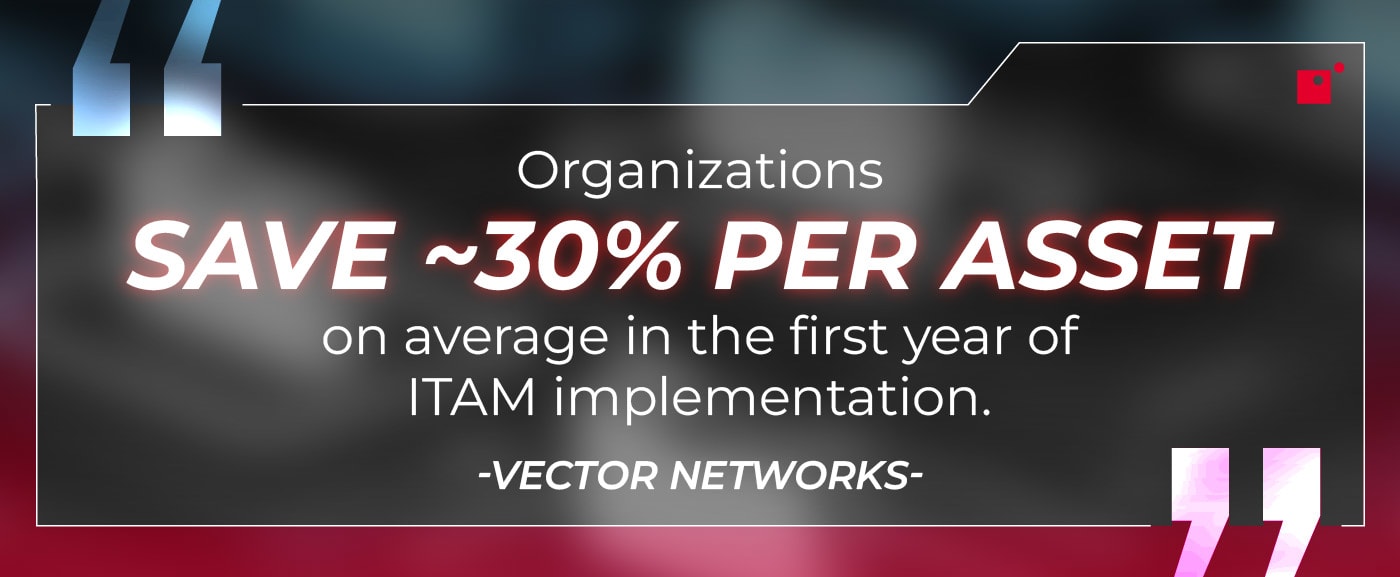
ITAM provides visibility into what assets exist and how they’re used, making it easier to eliminate redundant purchases, reclaim unused licenses, and avoid unnecessary renewals.
- Reduced risk and stronger compliance
Accurate asset data supports software audits, licensing compliance, and secure device retirement—helping organizations minimize legal, financial, and security exposure.
- Better cross‑functional decision-making
A shared source of asset data aligns IT, finance, procurement, and security teams, enabling smarter purchasing decisions and clearer accountability.
- Greater operational efficiency
Standardized processes for requesting, deploying, and managing assets reduce manual work, speed up support, and improve the overall employee experience.
- More effective long‑term planning
Lifecycle insights reveal trends in usage, replacement cycles, and spend, allowing organizations to plan ahead instead of reacting to issues after they surface.
Together, these benefits make ITAM a foundational capability for managing modern, distributed technology environments—bringing structure, visibility, and control to an otherwise fragmented landscape.
The Role of Automation and AI in ITAM
As IT environments grow more dynamic, manual asset management simply doesn’t scale. Automation and AI help ITAM teams keep pace by reducing human effort, improving data accuracy, and turning raw asset data into actionable insight.
Automation plays a foundational role in modern ITAM. Discovery tools can automatically detect hardware, software, and cloud resources across the environment, keeping inventories up to date without constant manual input.
Automated workflows also streamline routine tasks—asset requests, approvals, assignments, and retirements—so teams spend less time maintaining records and more time acting on them.
Common areas where automation adds immediate value include:
- Continuous asset discovery and inventory updates
- License assignment and reclamation
- Contract and renewal tracking
- Policy-based provisioning and decommissioning
AI builds on that foundation by adding intelligence and context. Instead of simply reporting what assets exist, AI-driven ITAM tools can analyze patterns in usage, spend, and lifecycle data.
That analysis helps organizations spot inefficiencies early—such as unused licenses, overprovisioned cloud resources, or assets nearing end of life.
AI can also support more proactive decision-making by:
- Identifying anomalies or compliance risks before audits
- Forecasting future asset needs based on historical trends
- Recommending optimization opportunities across hardware, software, and cloud environments
Importantly, automation and AI don’t replace ITAM strategy—they reinforce it. The most successful programs pair smart technology with clearly defined processes and ownership.
When that balance is in place, automation keeps asset data accurate, while AI helps teams move from reactive management to continuous optimization.
As IT ecosystems continue to evolve, automation and AI are becoming less of a differentiator and more of a requirement for effective IT Asset Management.
Getting Started with IT Asset Management
Getting started with IT Asset Management doesn’t require a full transformation upfront. The most effective programs begin by defining scope and ownership—deciding which asset types to manage first and who is responsible for maintaining accurate data. Starting small helps teams build momentum without overcomplicating the process.
From there, the focus should be on creating a reliable, centralized inventory and standardizing core lifecycle processes. Consolidating asset data into a single system, then aligning how assets are requested, deployed, reassigned, and retired, establishes consistency and improves data quality. Integration with tools like IT service management, procurement, and finance further strengthens accuracy and visibility.
As the program matures, ITAM becomes a cycle of continuous improvement. Regularly reviewing asset data uncovers optimization opportunities, informs future purchasing decisions, and supports long‑term planning. The key is progress over perfection—each step toward better visibility and control delivers value and lays the foundation for a more strategic IT Asset Management practice.
Wrapping Up on ITAM
IT Asset Management is no longer just about tracking devices—it’s about maintaining visibility and control across an increasingly complex technology environment. As organizations rely more heavily on software, cloud services, and distributed hardware, ITAM provides the structure needed to manage cost, reduce risk, and make informed decisions at scale.
When approached as an ongoing discipline rather than a one‑time initiative, ITAM becomes a strategic enabler. Clear ownership, accurate data, and well‑defined lifecycle processes allow teams to move from reactive cleanup to proactive optimization—getting more value out of every technology investment.
Ultimately, effective IT Asset Management helps organizations align technology with business needs. It creates clarity in environments that would otherwise be fragmented, and it lays the groundwork for smarter, more resilient IT operations over time.
If you're looking to get started in your technology alignment and organization, explore Impact's IT asset management services further.