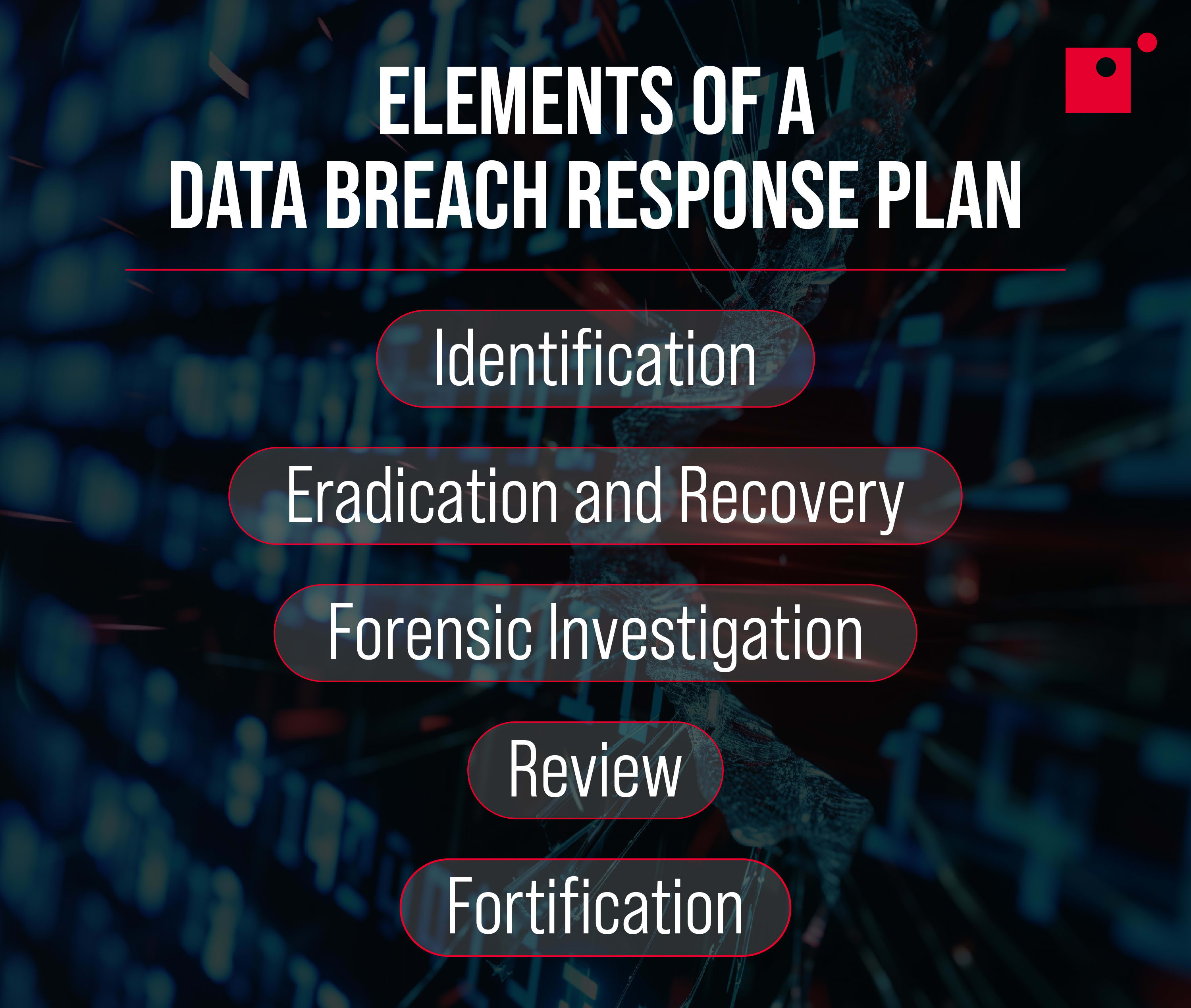
A data breach is stressful, but your response plan shouldn’t be. This guide walks through the essential parts of an effective data breach response plan, including identification, isolation, eradication, recovery, forensic investigation, and fortification.
Blog Post
7 minute read
Feb 25, 2026
A data breach response plan gives organizations a structured way to react when something goes wrong. Instead of scrambling to figure out what systems were touched or how far the damage spreads, a well‑built plan outlines the steps teams follow from the moment a breach is detected through full recovery.
It brings order to a situation that can easily feel chaotic.
At its core, the plan lays out how to identify the breach, contain the threat, remove the malicious elements, recover affected data, and investigate what happened. Those actions feed into a final, equally important phase: strengthening defenses so the same type of incident doesn’t happen again.
Each stage contributes to minimizing downtime, reducing financial impact, and protecting customer trust. The elements of a data breach response plan we cover below include:
Get inside the mind of a threat actor in Impact’s webinar, How to Hack Your Business.
The Purpose of a Data Breach Response Plan
A data breach response plan gives organizations a defined playbook for handling one of the most disruptive events they can face. It establishes the actions teams take the moment a breach is suspected, how they work together during the investigation, and what steps follow once the threat is contained.
Without a plan, even a small incident can escalate into a long, expensive recovery.
At its core, the plan serves a few key purposes:
Reduce confusion during high‑pressure moments. Teams know their roles, responsibilities, and communication channels ahead of time.
Limit the damage. A structured approach helps contain the breach quickly, cutting off access and preventing additional data loss.
Protect business continuity. Fast, coordinated action keeps downtime and disruption as low as possible.
Preserve evidence. A proper response ensures logs, system activity, and artifacts are collected cleanly for forensic review.
Support legal and regulatory obligations. Many industries require documented incident response processes—and a reliable plan makes compliance far easier.
When executed correctly, a breach response plan becomes more than a checklist. It’s a framework that strengthens resilience, protects customer trust, and shortens the path back to normal operations.
What Happens When a Breach Is Detected?
When a breach is detected, the clock starts immediately. Security teams need to confirm whether the activity is legitimate, assess how far it has spread, and determine what systems or data may be at risk.
The first minutes and hours matter because the longer a threat remains active, the more damage it can cause.
Detection usually triggers a structured intake process. Teams verify the alert, cross‑check logs, and pinpoint the affected systems.
Once the breach is confirmed, the response plan formally takes over—with each step designed to keep the incident from escalating and to protect the organization’s most critical assets.
Launching the Response Plan
After confirming a breach, teams move quickly to contain the threat, protect critical systems, and limit further exposure. Each step is coordinated so nothing is missed.
1. Isolation
Isolation is the first and most urgent step once a breach response plan is activated. The goal is simple: stop the threat from moving any further.
Teams quickly separate affected systems, accounts, or network segments from the rest of the environment so the attacker’s access is cut off.
This phase often includes disabling compromised credentials, restricting traffic, and removing certain systems from the network altogether. By containing the breach early, organizations prevent additional data loss and give themselves the space they need to begin neutralizing the threat.
A well‑executed isolation process also ensures that business‑critical systems keep running wherever possible. Instead of shutting everything down, teams focus on targeted containment—protecting operations while limiting the attacker’s reach.
2. Neutralization and Eradication
Once the affected systems are isolated, the next step is neutralizing the threat. Security teams work to identify the malicious components involved, whether that’s malware, unauthorized access points, or manipulated configurations, and shut them down.
The goal is to stop the attacker’s activity entirely so the environment can be safely restored.
Eradication focuses on removing every trace of the breach from the impacted systems. That may involve deleting malicious files, closing exploited vulnerabilities, rotating compromised credentials, or restoring certain components to a clean state.
This phase ensures the attacker can’t re-enter through the same path, or a back door, and that the systems are stable enough for recovery efforts to begin.
3. Data Recovery
Once the threat has been removed, teams shift their attention to restoring affected systems and data. This process often begins with validating the integrity of backups and determining which versions are safe to use.
From there, systems are brought back online in a controlled way to avoid reintroducing any compromised components.
Recovery is more than simply loading a backup. Teams confirm that restored data is complete, that critical applications function as expected, and that dependencies between systems are intact. The goal is to return operations to normal quickly while maintaining confidence that the environment is stable and secure.
4. Forensic Investigation
After systems are stabilized, a forensic investigation begins to determine how the breach happened and what data or systems were affected. Teams gather logs, network activity, and system snapshots to trace the attacker’s path and identify the exact point of entry.
This step is critical for understanding the full scope of the incident and ensuring no hidden access points remain. The investigation also focuses on verifying what data was touched, exfiltrated, or altered.
Accurate evidence collection helps organizations meet regulatory requirements, support any legal needs, and refine their long‑term security strategy. The findings ultimately guide the final phase of the response plan: strengthening defenses to prevent future incidents.
5. Fortification
The final step in the response plan is strengthening defenses to prevent a similar breach from happening again.
Using insights from the investigation, teams identify the gaps that made the incident possible, whether those stemmed from outdated software, weak access controls, misconfigurations, or a breakdown in internal processes.
Fortification focuses on making meaningful improvements rather than quick fixes. That may include updating security policies, refining monitoring tools, patching vulnerabilities across the environment, or adjusting user permissions.
Many organizations also use this phase to refresh employee training and run tabletop exercises to validate that the response plan still holds up. By the time fortification is complete, the organization isn’t just back to normal; it’s better prepared for whatever comes next.
How Data Breach Response Plans Minimize Downtime
A well‑designed breach response plan keeps downtime in check by eliminating guesswork. Instead of figuring out next steps in the middle of an incident, teams follow a predefined sequence that accelerates containment, cleanup, and recovery.
Clear roles and communication channels also play a major part. When everyone knows who is responsible for isolation, forensics, system restoration, and stakeholder updates, work happens in parallel rather than sequentially. That coordination shortens the time it takes to stabilize systems and bring critical services back online.
The plan also reduces the risk of repeated disruptions. By ensuring the threat is fully removed and the environment is thoroughly validated before operations resume, organizations avoid the setbacks that come from lingering footholds or overlooked vulnerabilities.
Final Thoughts on Data Breach Response Plans
A strong data breach response plan gives organizations a clear path through one of the most disruptive situations they can face. By outlining how to identify, contain, remove, and investigate a threat, the plan reduces uncertainty and helps teams act with precision instead of scrambling in the moment.
Response plans aren’t static documents. As threats evolve and operations change, the plan should be revisited, tested, and refined. Organizations that keep their response strategies current are better positioned to protect critical systems, maintain customer trust, and recover quickly when incidents occur.
Andrew Mancini is a Content Writer for Impact's in-house marketing team, where he plans content for the Impact insights hub, manages the publication schedule, drafts articles, Q&As, interview narratives, case studies, video scripts, and other content with SEO best practices. He is also the main contributor on a monthly cybersecurity news series, The Security Report, researching stories, writing the script, and delivering the report on camera.