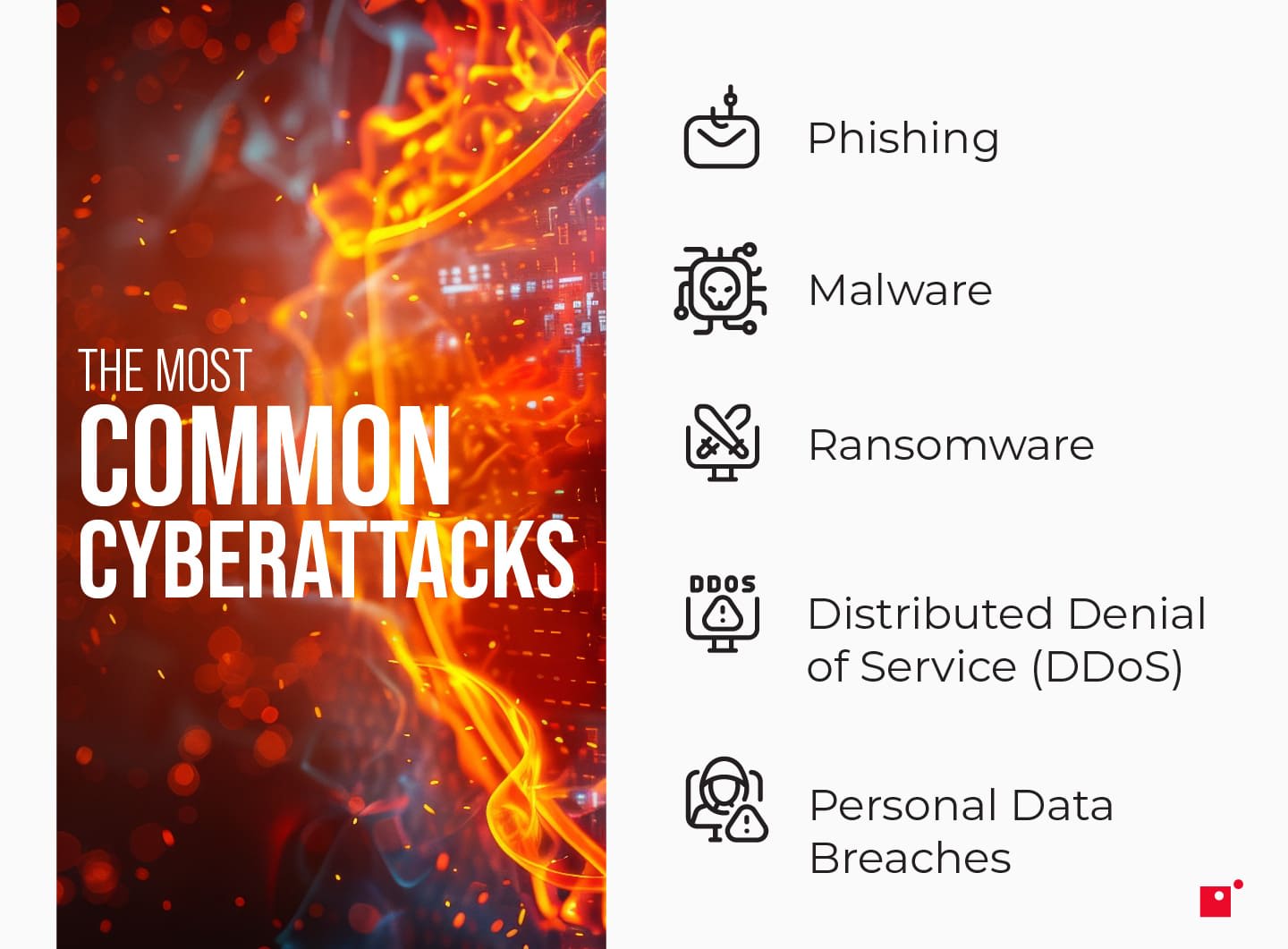
Enjoy this deep dive into the implications of five of the most eye-catching and significant cybersecurity and data breach statistics.
Blog Post
8 minute read
Dec 17, 2025
5 Cybersecurity Statistics to Understand
When it comes time to go to the gym, each of us secretly hopes that we’re the exception to the rule and don’t actually have to work out. But, unless you’re willing to take a very big risk with your health and future wellness, we all accept that the statistics on health don’t lie, and we should put in the effort. Cybersecurity statistics are the same.
We all hope that our company isn’t the one that will get hit. But knowing what has happened to many other organizations can inform our strategy for ensuring we’re doing everything we can to actually prevent a cyberattack.
Join us as we break down five major cybersecurity statistics and what they mean for shaping a cybersecurity strategy to stay healthy and breach-free.
In 2025, the average cost of a data breach globally came down to $4.44 million, down from $4.88 million the year prior. That said, the cost of a breach for a US company jumped to $10.22 million, highlighting the growing financial burden of cyberattacks in the US specifically.
These figures reflect more than just immediate costs like data recovery and legal fees. It also includes long-term repercussions like brand damage, lost customer trust, and increased regulatory scrutiny.
As companies rely more on digital systems, the scale of these breaches has grown, with each compromised record adding to the financial hit. The rising cost also underscores the need for robust cybersecurity measures, as the investment in prevention is becoming far cheaper than the price of recovery.
For companies operating in highly regulated industries like finance and healthcare, this figure is a stark reminder that lax security can lead to catastrophic financial outcomes.
Organizations must now rethink their cybersecurity strategies, not only to mitigate attacks but to safeguard their reputations in an era where a single breach can lead to multi-million dollar damages and potentially cripple operations.
2. 0.05%: Chance of a Cybercrime Entity Being Prosecuted in the US
The fact that only 0.05% of cybercrime organizations face prosecution in the US underscores a troubling gap in law enforcement's ability to combat cybercriminals. This minuscule percentage reflects the growing sophistication of cybercrime, where attackers use techniques to stay anonymous, cryptocurrencies, and cross-border operations to evade capture.
As a result, cybercriminals can operate with relative impunity, exploiting weak international cooperation and jurisdiction boundaries that often protect them from legal consequences.
This lack of accountability emboldens cybercrime groups, fueling a rise in attacks ranging from ransomware to corporate espionage. It also creates a dangerous feedback loop: as more criminals avoid prosecution, the financial rewards become more enticing, drawing even more individuals and organizations into the fold.
The 0.05% prosecution rate signals a critical need for more coordinated efforts, stronger cybercrime laws, and enhanced digital forensic capabilities. This also reiterates just how important it is for individual organizations to take it upon themselves to install robust cybersecurity defenses that protect their data, their business, and most importantly, their people.
3. $2.73 Million: Average Ransomware Payment
The average ransomware payment reached $2 million in 2025, marking a slight decrease year-over-year and underscoring the escalating threat that ransomware poses to businesses of all sizes.
This surge calls further attention to the increasing sophistication of ransomware attacks, where cybercriminals employ more aggressive tactics like double extortion—demanding payment not only to unlock systems but also to prevent the public release of sensitive data. Companies often feel compelled to pay and avoid both operational downtime and reputational damage.
The growing ransomware payouts also reflect the expanding attack surface as businesses digitize more of their operations and data. The higher the stakes, the more likely organizations are to pay up, especially in industries like healthcare and finance, where disruptions can have life-or-death consequences or result in massive regulatory fines.
This rise in ransom payments fuels a vicious cycle: as cybercriminals pocket these millions, they reinvest in more sophisticated tools and tactics, making future attacks even harder to defend against. For businesses, the $2.73 million figure is a harsh reminder that proactive cybersecurity investment is essential to avoid potentially crippling financial consequences.
4. Infostealer Deliveries Skyrocket 84% per Week
The number of infostealers being delivered each week has grown by 84% in 2025. This underlines the staggering persistence and scale of age-old cybercrime tactics like phishing.
Cybercriminals are increasingly exploiting phishing emails as a gateway for infostealer malware. Recent data shows a sharp surge in these attacks, with weekly delivery rates climbing dramatically. Infostealers harvest sensitive information such as login credentials, which attackers can later use for identity-based intrusions.
This trend underscores phishing’s evolution into a stealthy infection vector: users, misled by convincing links, unknowingly enable malware that drains critical data. As adversaries refine their tactics to conceal payloads, organizations face longer detection times for ransomware and breaches, amplifying the overall risk landscape.
To counter this growing threat, businesses need to strengthen email security and user awareness. Implementing multi-factor authentication, deploying advanced threat detection tools, and conducting regular phishing simulations can significantly reduce exposure.
Continuous monitoring of credential use and rapid incident response are also critical to preventing attackers from leveraging stolen data for follow-on compromises.
5. Security Flaws in Vibe Coding
45% of all code generated by AI contains exploitable flaws and major security vulnerabilities. This is a major issue, considering that 97% of developers are actively using AI coding tools.
AI-powered coding tools accelerate development, but they also introduce significant security gaps. These systems often pull from public repositories, which means insecure patterns—like weak encryption or poor input validation—can slip into production code. Because these flaws aren’t always obvious during testing, they create opportunities for injection attacks, data leaks, and other vulnerabilities.
Another concern is overconfidence in automation. Developers may assume AI-generated code is inherently safe, reducing manual reviews and security testing. This false sense of security can lead to overlooked misconfigurations, hardcoded secrets, and logic errors. Attackers are even experimenting with prompt injection to trick AI tools into producing malicious code, adding a new layer of risk.
Finally, accountability is a challenge. When vulnerabilities emerge, tracing their origin in auto-generated code is difficult, slowing remediation and incident response. Combined with the rapid adoption of these tools, this lack of transparency expands the attack surface—making proactive security measures essential.
Final Thoughts on These Cybersecurity Statistics
In the realm of cybersecurity things will always be changing and evolving. It is simply the nature of a field that is so reliant on the trajectory of technology. As such, cybersecurity and cybercrime can feel too daunting to ever truly grasp.
In reviewing and diving into the implication of these statistics, however, you can gain a better understanding of how wide scale these cybercrime syndicates truly are and just how imperative it is to be vigilant in installing a modern and comprehensive cybersecurity strategy.
Andrew Mancini is a Content Writer for Impact and DOT Security’s in-house marketing team, where he plans content for both the Impact and DOT Security insights hubs, manages the publication schedule, drafts articles, Q&As, interview narratives, case studies, video scripts, and other content with SEO best practices. He is also the main contributor on a monthly cybersecurity news series, The DOT Report, researching stories, writing the script, and delivering the report on camera.